
Last updated September 25, 2026
Seasonal ADU Care for Pomona: Year-Round Homeowner’s Guide
A Pomona ADU’s first Santa Ana wind season - typically October through December - is when rooftop vent caps, exterior caulk joints, and newly planted erosion-control vegetation face their first real stress test, often before the one-year contractor warranty has expired. Most homeowners assume Southern California’s “mild” climate means minimal maintenance. In our experience since 2015, the Inland Empire’s distinct thermal and wind patterns create four separate maintenance windows that, if ignored, erode both the building’s envelope and the permit-compliant condition required to keep your warranty and resale value intact. This guide maps what to do, when to do it, and how to document it.
Quick Answer
Pomona ADU owners should perform targeted maintenance four times yearly: summer slab and stucco monitoring for heat expansion, fall roof and vent inspection before Santa Ana winds peak, winter drainage verification during rain events, and spring exterior seal inspection before UV exposure intensifies. Document each round with dated photos to support warranty claims, insurance filings, and future buyer inspections.
Table of Contents
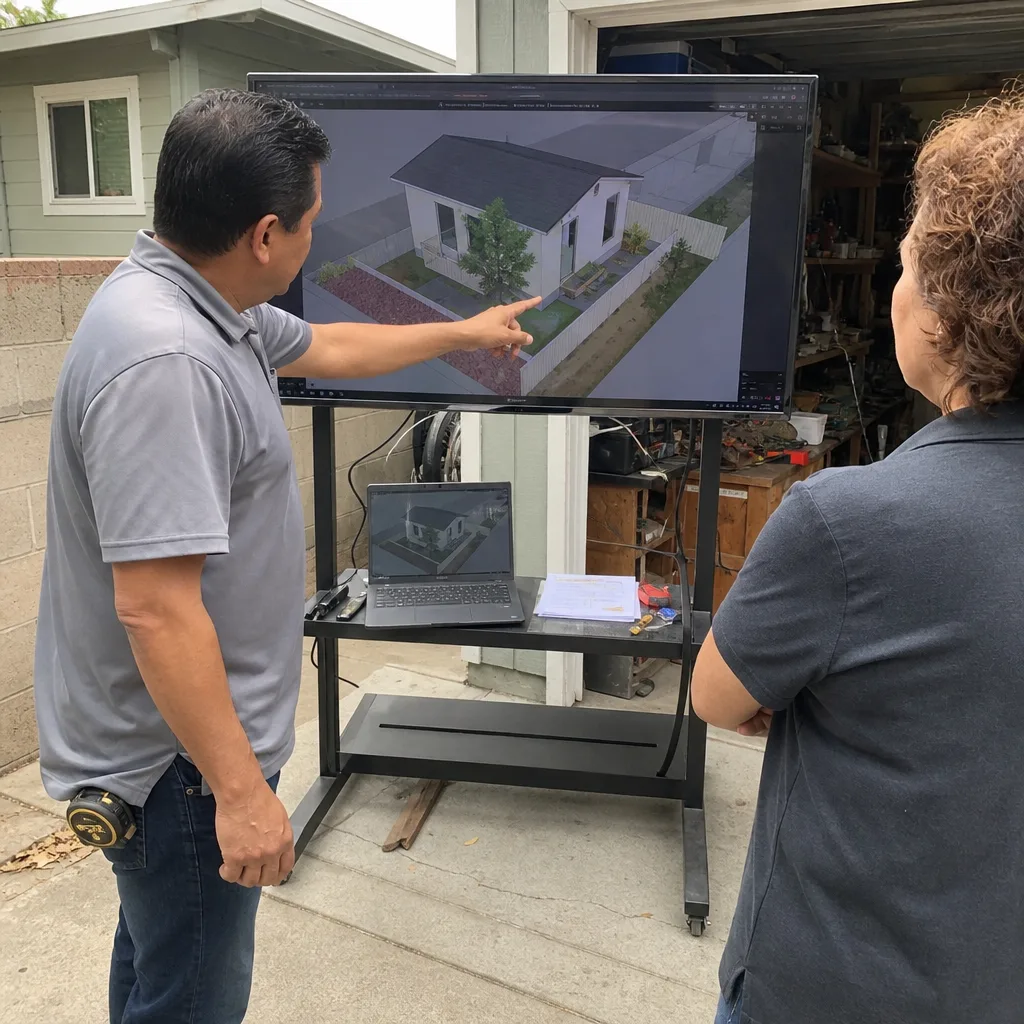
- Summer Heat: Concrete, Stucco, and What 100°F Does to New Construction
- Santa Ana Season: The Real Stress Test for Your ADU’s Envelope
- Winter Rain Events: Four Drainage Failures We See Most in Pomona
- Spring Prep: The Last Good Window Before UV Load Peaks
- How to Document Seasonal Maintenance for Warranty and Resale
- Special Notes for Prefab and Modular ADU Systems
- Common Mistakes to Avoid
- When to Call a Professional
- Frequently Asked Questions
Summer Heat: Concrete, Stucco, and What 100°F Does to New Construction
From June through September, Pomona sits under the Inland Empire heat dome. Sustained triple-digit days aren’t unusual - the National Weather Service records 100°F+ stretches that last a week or more. For a newly completed ADU, this is the first full thermal cycle the materials have experienced as an assembled system.
Concrete slab behavior. A garage conversion ADU in Pomona typically rests on an existing 4-inch slab poured decades earlier for vehicle loading. New detached ADUs get a fresh 6-inch reinforced slab with a vapor barrier. Both move, but differently. The older slab has already settled; the new slab is still curing through its first year of seasonal moisture and temperature swings.
Here’s what to watch for:
- Hairline cracks less than 1/16 inch that run in straight lines - usually cosmetic shrinkage, especially in the first 18 months
- Diagonal cracks wider than 1/8 inch, particularly at re-entrant corners - these can signal differential settlement and warrant documentation
- Cracks that show vertical displacement (one side higher than the other) - always structural, always worth a professional look
- Soft spots or hollow sounds when tapped - possible vapor barrier breach or subgrade erosion
Stucco - the dominant exterior finish in Pomona’s architectural context - expands and contracts with temperature swings. A 40°F daily swing (105°F afternoon, 65°F evening) is common in July. The stucco doesn’t fail in the heat; it fails where it’s restrained. Check control joints, especially at window and door returns, for cracking or separation from the framing. A gap wider than a dime at a control joint suggests the joint wasn’t backer-rodded and sealed correctly during construction.
HVAC load and filter life. Summer in Pomona pushes mini-split systems hard. The particulate load from adjacent freeways and the San Gabriel Valley basin means filters load faster than coastal climates. We recommend monthly visual inspection, not the quarterly schedule that works in Santa Monica. A clogged filter in August can cause the condensate line to freeze, which triggers water damage when it thaws.
One more item most owners miss: the exterior hose bib and any irrigation lines serving the ADU’s dedicated landscaping. Polyethylene tubing left exposed on a south-facing wall will soften and deform. Route it through sleeve conduit, or at minimum, check it monthly for kinking.
Santa Ana Season: The Real Stress Test for Your ADU’s Envelope
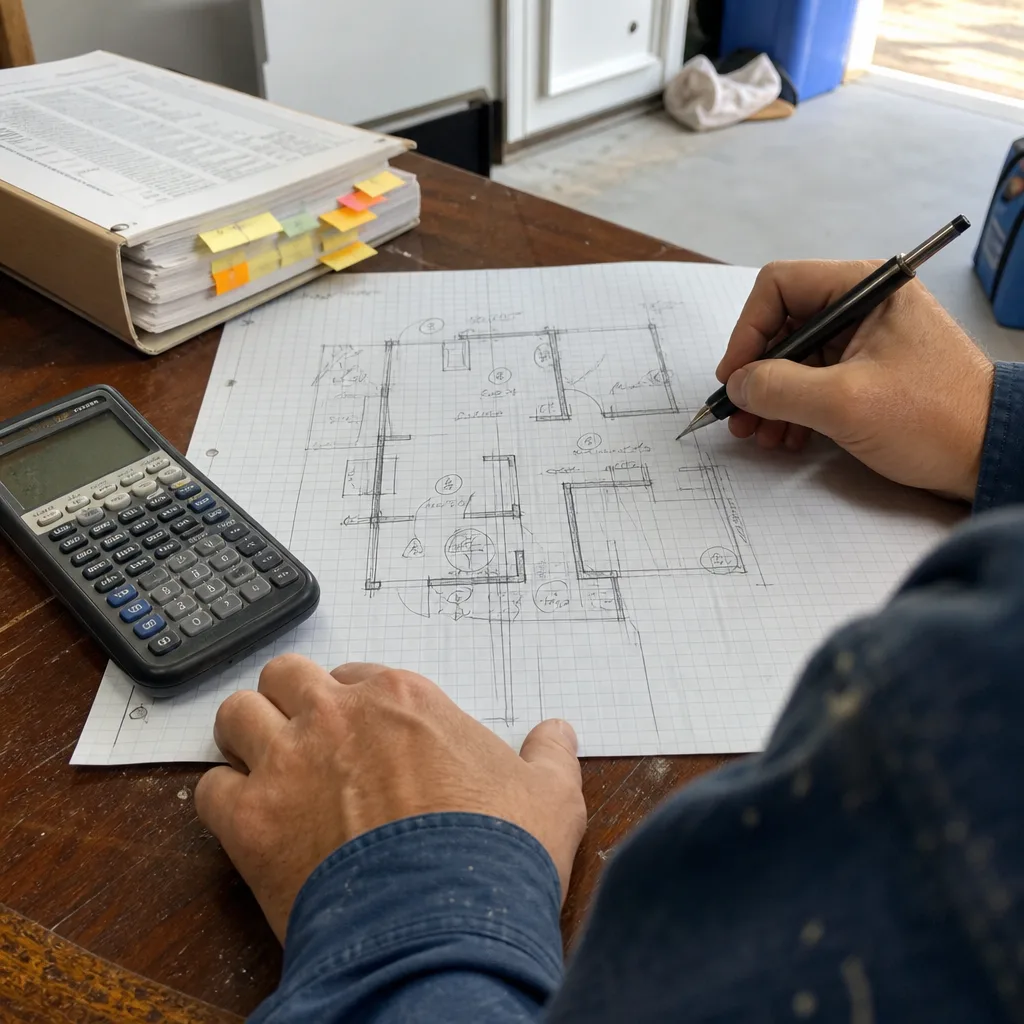
October through December brings the Santa Ana winds - dry, hot, and sustained at 25-40 mph with gusts past 60. For a Pomona ADU, this is the most destructive maintenance window. The winds don’t just blow debris; they create pressure differentials across the building envelope that test every sealed joint.
Roof and vent inspection checklist. Perform this in early October, before the first major event:
- Walk the perimeter with binoculars and check every roof penetration - plumbing vents, exhaust fans, combustion appliance vents - for intact rain caps. A missing cap admits wind-driven dust and, in winter, rain directly into the attic or chase.
- Verify ridge vent sections are fully seated and end caps are present. Santa Ana winds lift poorly secured ridge vents like a sail.
- Check the dryer vent hood. The flapper should move freely and seal when closed. Lint buildup here is a fire risk; wind-driven debris can jam it open.
- Inspect fascia and soffit vents for intact screens. Rodents exploit gaps torn by wind-borne branches.
- Document with dated photos of each penetration from the ground and, if safe, from a ladder at the eave. Do not walk the roof yourself - the slope and wind exposure create genuine fall risk.
HVAC filter replacement tied to particulate load. Santa Ana winds carry fine dust from the Mojave and Colorado Desert basins. In Pomona, this dust is alkaline and abrasive. Replace or clean the mini-split filter after the first major wind event, not on a calendar schedule. Mark the filter frame with the date. If you run the system during a dust event, the filter loads in hours, not weeks.
Documenting damage for warranty claims. The one-year contractor warranty on most Pomona ADU projects expires before the second Santa Ana season. If wind damage occurs in Year 1, you need evidence that the damage resulted from construction deficiency, not owner neglect. Photos of pre-season condition, dated maintenance logs, and prompt written notice to the builder create the paper trail. Under Ellery ADU Studio Pomona‘s Haven Standard, our 365-Day Done Right Promise requires us to make it right if the finished ADU is not built to the permitted drawings - but we can only act on what we can verify.
Landscaping note: newly installed erosion-control plantings on ADU site prep rarely have root systems deep enough to resist October winds. Stake young trees and shrubs, and verify that any hydroseed or jute matting is pinned per the landscape plan filed with Pomona Building & Safety.
Winter Rain Events: Four Drainage Failures We See Most in Pomona
January and February bring brief but intense rain events to Pomona - atmospheric rivers that drop 2-4 inches in 48 hours on ground baked hard by summer. The runoff coefficient on a compacted construction site is dramatically higher than pre-development conditions. Four drainage points fail predictably:
1. Downspout extensions. New ADU gutters often terminate at splash blocks or short extensions that worked in light drizzle but fail in a January storm. Water pools at the foundation, saturating the stem wall and potentially undermining the slab edge. Verify extensions carry water at least 6 feet from the foundation, and that the discharge path hasn’t been blocked by landscape growth or tenant-placed items.
2. Window flashing. Pomona’s combination of summer heat and winter rain is hard on butyl and rubberized flashings. Check the sill pan flashing under ground-floor windows - the most vulnerable detail. Look for staining on the interior drywall below the window, or efflorescence on the exterior stucco at the sill. Either indicates water intrusion that, left unaddressed, degrades the framing and triggers mold.
3. Foundation weep screeds. Stucco terminates at grade with a weep screed - a perforated metal strip that allows moisture to escape the wall cavity. In new construction, this is often buried by final grading or landscaping. In Pomona’s clay-heavy soils, winter saturation against a buried weep screed wicks moisture into the wall for weeks. Verify the screed is visible and clear for its full length, minimum 4 inches above final grade per ADU Permits, Codes & Inspections in CA: What You Need to Know.
4. Site grading retention. The compacted fill around a new detached ADU settles in the first year. What drained away from the foundation in September may pool against it in February. Walk the perimeter during or immediately after a rain event. Standing water within 10 feet of the foundation for more than 24 hours indicates a grading or drainage deficiency that needs correction before the next season.
When to escalate. Any water intrusion into the conditioned space - visible moisture, staining, musty odor - warrants professional assessment. Water damage in the first year often traces to construction sequencing (stucco applied too wet, flashing lapped incorrectly) rather than maintenance neglect. Document with photos and written description, and notify the builder promptly.
Spring Prep: The Last Good Window Before UV Load Peaks
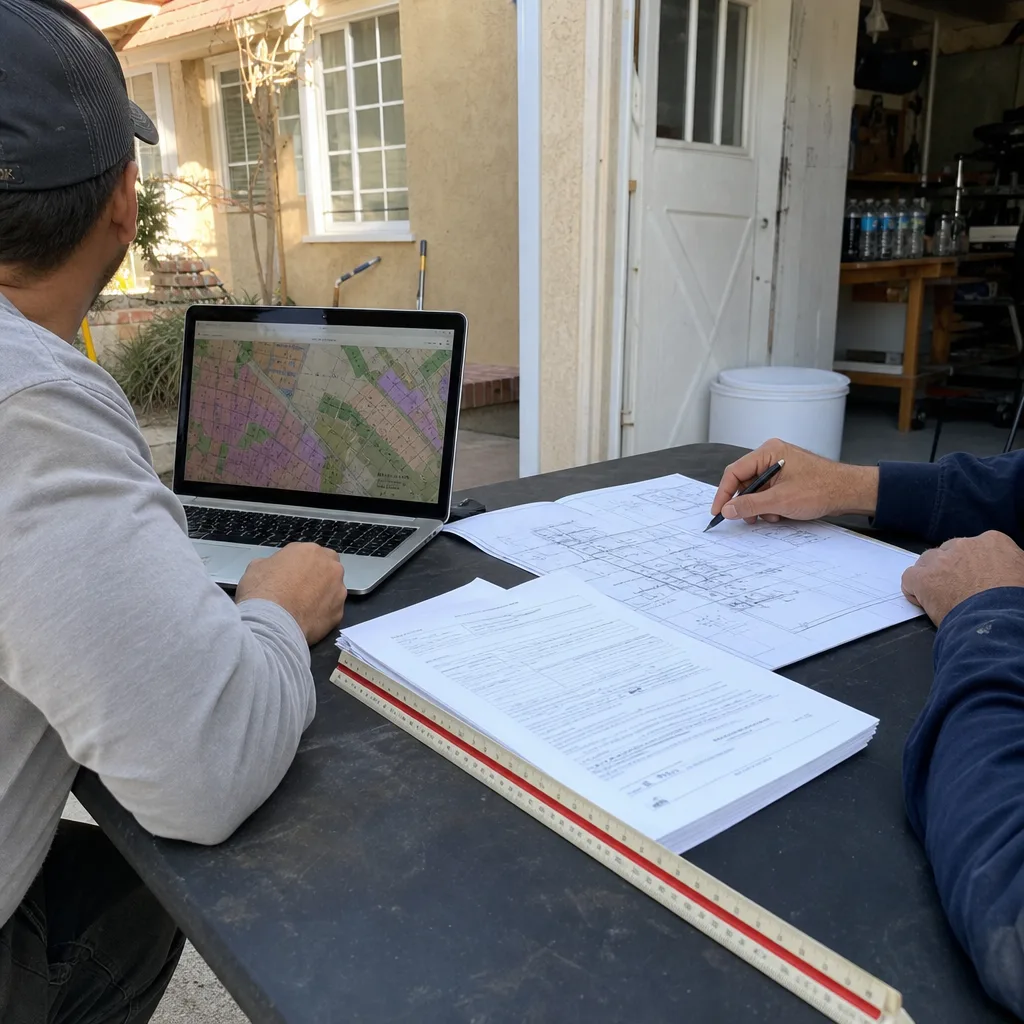
March through May in Pomona offers moderate temperatures, low wind, and minimal rain - the ideal conditions for exterior maintenance that won’t be comfortable or safe in summer.
Exterior paint and caulk inspection. UV degradation accelerates after the spring equinox. Inspect all caulk joints at windows, doors, control joints, and penetrations. Failed caulk pulls away from one substrate, creating a gap that admits water and insects. Re-caulk now, using a paintable polyurethane or silicone-modified acrylic matched to the original specification. Painting over failed caulk traps the failure; remove and replace first.
For painted surfaces, look for chalking - a powdery residue on the surface that indicates binder breakdown. In Pomona’s UV intensity, even quality acrylic latex can show chalking at year 3-4 on south and west exposures. Light chalking accepts a quality primer; heavy chalking requires pressure washing and reassessment.
Smoke and CO detector verification. California law requires 10-year sealed-battery detectors in new construction, but many Pomona ADU owners add battery-backup units for redundancy. Spring is the logical check point - before fire season, before summer houseguests, before the tenant’s cooking habits test every alarm in August. Press the test button. If a hardwired unit chirps, replace the backup battery even if the unit is supposed to be sealed. Document the test date on the unit with a sharpie or on your maintenance log.
Irrigation system activation. If the ADU has dedicated landscaping with automatic irrigation, run each zone and check for head alignment, leaks at valves, and proper coverage. Summer water restrictions in Pomona make efficient irrigation a cost issue, not just a maintenance item. Adjust timers for the season - most systems are still on winter reduction when they should be ramping up for establishment.
How to Document Seasonal Maintenance for Warranty and Resale
A maintenance log is only as useful as its ability to persuade a third party: a warranty administrator, an insurance adjuster, or a buyer’s home inspector. Here’s the format we’ve seen work in Pomona’s market:
- Date and weather conditions. “March 15, 2025, 72°F, clear, following 0.3 inch rain on March 12-13.”
- Scope of inspection. List what you checked, not a vague “exterior inspection.” Example: “Roof penetrations, south and west elevation caulk joints, downspout extensions, window sill pans, weep screed visibility, mini-split filter, smoke/CO detectors.”
- Findings. State what you found, with measurements where relevant. “Caulk at master bedroom window, west elevation: gap 3/16 inch at upper left corner. All other joints intact.”
- Actions taken. “Removed failed caulk, cleaned substrate with mineral spirits, applied OSI Quad Max in #001 white, tooled smooth. Photographed before, during, after.”
- Photos. Minimum four per season: wide context shot, close-up of each finding, close-up of completed repair. Store with date stamp in cloud backup.
- Professional consultations. If you called a roofer, HVAC tech, or the original builder, note the company, date, and outcome. Attach any written report.
This format directly supports a warranty claim under the Haven Standard or any builder’s warranty. It also satisfies the documentation expectations of Pomona’s increasingly sophisticated ADU buyers, who’ve learned to ask for maintenance records since the market matured post-2020.
For insurance purposes, the log establishes that the owner exercised reasonable care. In a dispute over water damage, adjuster’s first question is often, “When did you last inspect the flashing?” A documented March inspection with photos of intact condition pre-dating the damage event shifts the burden.
Special Notes for Prefab and Modular ADU Systems
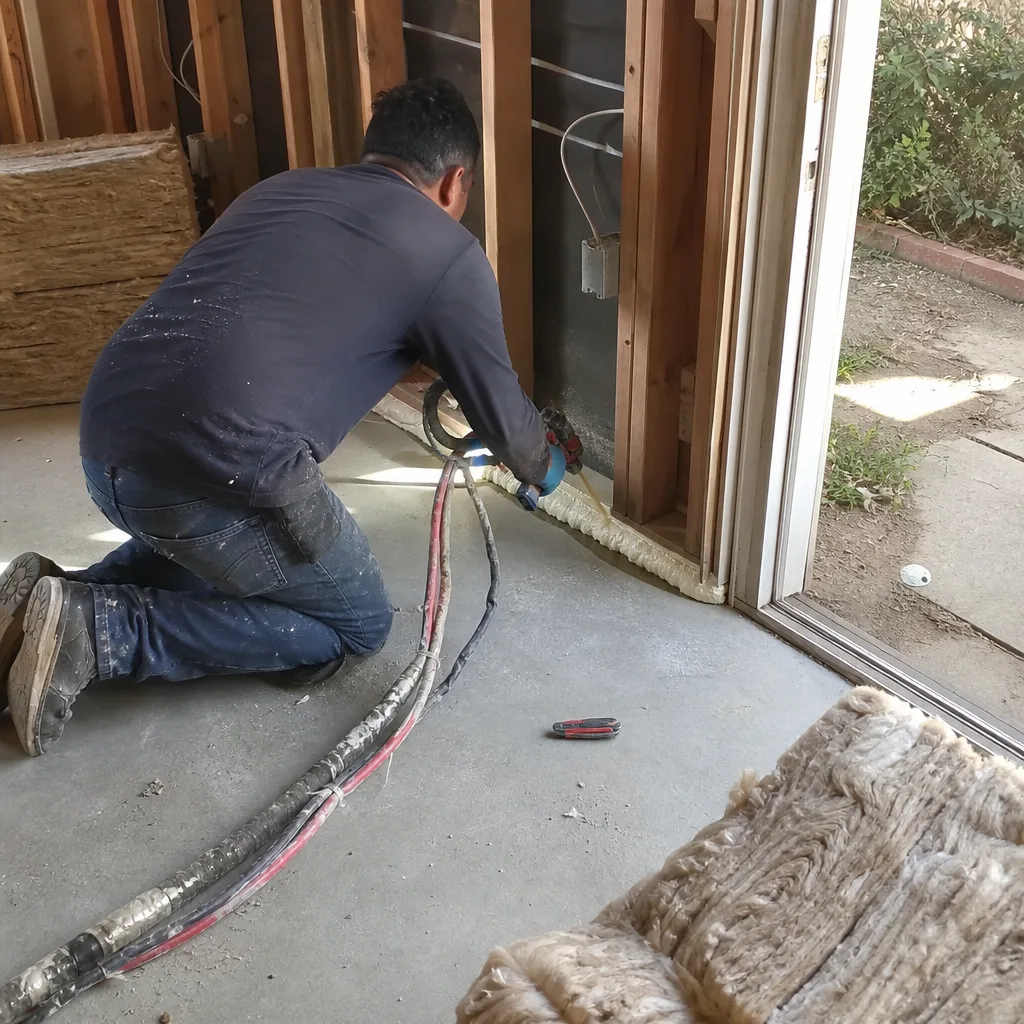
Pomona’s ADU market includes an increasing share of prefab and modular systems - brands like Abodu, Cover, and Dvele that Ellery ADU Studio specifies and coordinates within our single-contract design-build model. These systems have distinct maintenance profiles that differ from site-built stucco construction.
Panelized and modular envelope systems. Abodu units typically ship with factory-applied cladding - often fiber-cement or metal panel - with sealed joints designed for minimal field modification. The maintenance focus shifts from caulk inspection to sealant bead continuity at panel joints and trim. Factory sealants are UV-stable but not infinite; inspect at year 2 and every two years thereafter. Do not apply additional sealant over factory beads without manufacturer approval - incompatible chemistry causes adhesion failure.
Foundation interface. Modular units set on pier or stem-wall foundations create a different moisture dynamic than slab-on-grade construction. The crawl space or utility chase beneath the unit needs seasonal inspection for rodent intrusion, standing water, and vapor barrier integrity. In Pomona’s winter rain pattern, a pier foundation with inadequate drainage gravel can channel water directly to the bearing points.
HVAC integration. Cover and Dvele systems often specify dedicated HVAC packages with proprietary controls. The filter specifications, reset procedures, and warranty terms differ from off-the-shelf mini-splits. Maintain the manufacturer’s documentation in the same file as your seasonal log; buyer’s inspectors will ask for it, and warranty claims require proof of correct filter type and replacement interval.
Set and finish warranty coordination. Prefab warranties typically split: factory coverage for the module, builder coverage for site prep, utilities, and finish connections. In our new detached ADU projects, Ellery ADU Studio holds both under one contract and one written price, so the owner has a single point of accountability. If you purchased through a separate module seller and site contractor, your maintenance documentation needs to clearly attribute any finding to one scope or the other - a cracked window from transport versus a leaking window from rough opening preparation, for example.
Common Mistakes to Avoid
- Treating Pomona like coastal Southern California. The Inland Empire’s thermal range and wind exposure are closer to Phoenix than Santa Monica. Maintenance schedules calibrated for mild climates leave your ADU exposed during its most vulnerable first years.
- Walking the roof yourself. Santa Ana winds create unpredictable gusts even on calm-appearing days. Falls from single-story roofs cause permanent injury. Use binoculars, a drone, or hire a professional with proper fall protection.
- Ignoring the first-year settlement period. New construction moves more in years 1-2 than in the following decade. A crack that appears “suddenly” in month 14 has been developing since month 4. Seasonal inspection catches it before it becomes structural.
- Using incompatible sealants. Silicone caulk on a surface to be painted, or latex caulk on a wet-location flashing, fails within months. Match the product to the substrate and exposure - the original construction documents usually specify this.
- Documenting only problems. Insurance adjusters and warranty administrators need to see normal condition too. A log that only records failures looks like neglect of everything else. Photograph intact details as baseline evidence.
- Deferring maintenance until sale. Pomona’s ADU resale market now includes buyer inspections that specifically flag deferred maintenance. A $200 caulking job skipped in spring becomes a $2,000 credit demand at closing, or a failed inspection that delays the sale.
- Assuming the tenant will notice. Rental ADU tenants rarely report slow leaks, filter loading, or exterior degradation - they don’t own the asset. Build tenant communication into your seasonal schedule, or inspect personally.
When to Call a Professional
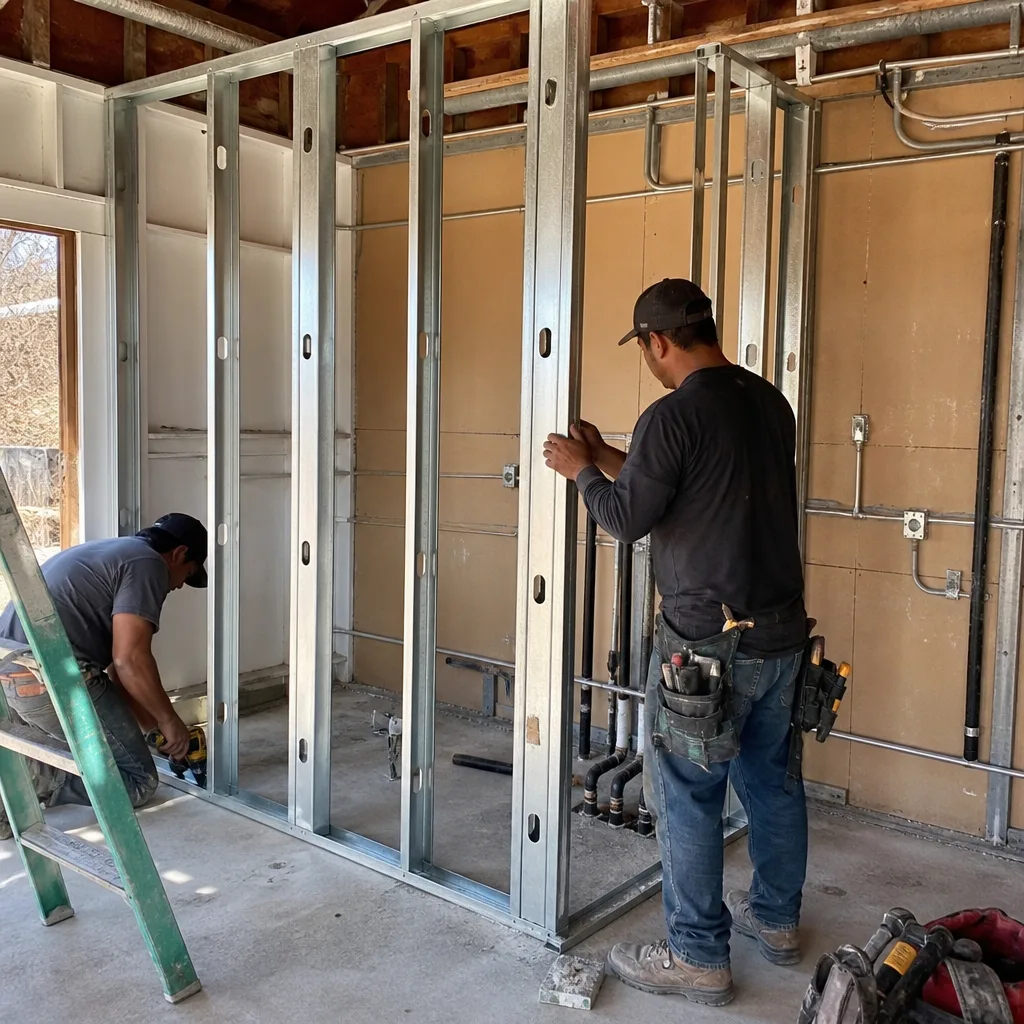
Some conditions exceed safe or effective owner maintenance. Call a licensed professional for: roof work on any slope steeper than 4:12; electrical panel work, including breaker replacement; gas line or combustion appliance service; structural cracks with vertical displacement; water intrusion into conditioned space; or any condition where you’re uncertain whether the finding is cosmetic or systemic.
For ADU-specific concerns - questions about whether a crack traces to design, construction, or normal settlement - Ellery ADU Studio Pomona offers free estimates in Pomona. We also provide a Free Second Opinion on any written estimate already in hand, with no obligation. Call (657) 286-7915 to schedule. A live person answers calls 24/7.
Frequently Asked Questions
Owner-performed seasonal inspection and minor upkeep (caulk, filters, basic landscaping) typically runs $150-$400 per year in materials. Professional roof inspection, HVAC service, and drainage assessment add $400-$800 annually. Budget $600-$1,200 all-in for a thorough program, less than most homeowners spend on their primary residence. Call (657) 286-7915 for an exact quote on any needed repairs - estimates are free.
Under the Haven Standard, Clause 1, every Ellery ADU Studio project is quoted with a written price before any work begins. The scope is locked at signing; no door-side upsells, no scope creep. If you’re working with another provider, request the same commitment in writing before authorizing work.
Hairline cracks under 1/16 inch, running straight and level, are typically shrinkage and cosmetic. Cracks wider than 1/8 inch, running diagonally, or with vertical displacement (one side higher) suggest structural movement and warrant professional assessment. In Pomona’s expansive clay soils, even new slabs can show seasonal movement; the key is whether the movement is progressive. Photograph and measure monthly - if it’s growing, call a structural engineer or the original builder.
Routine maintenance - caulking, painting, filter replacement, landscaping - does not require permits in Pomona. Work that alters structural, electrical, plumbing, or mechanical systems does. If your maintenance reveals a condition that requires system modification (replacing a window, re-routing a downspout into underground drainage), check with Pomona Building & Safety at (657) 286-7915 before proceeding. Unpermitted work complicates resale and insurance claims.
Retain records for the full period of ownership plus seven years. In California, construction defect claims can be brought for up to 10 years after substantial completion; your maintenance log is your primary defense against claims of owner neglect. For warranty purposes, most builder warranties require prompt notice of conditions - “prompt” defined as within 30 days of discovery in many contracts. Document the discovery date and the notice date separately.
We focus our construction capacity on design-build projects under our single-contract model, but we do provide assessment and repair services for existing ADUs in Pomona when the scope connects to our core competencies - envelope performance, drainage, and permit compliance. For routine maintenance, we can refer you to qualified local providers. Call (657) 286-7915 to discuss your specific situation; estimates are free.
The Bottom Line
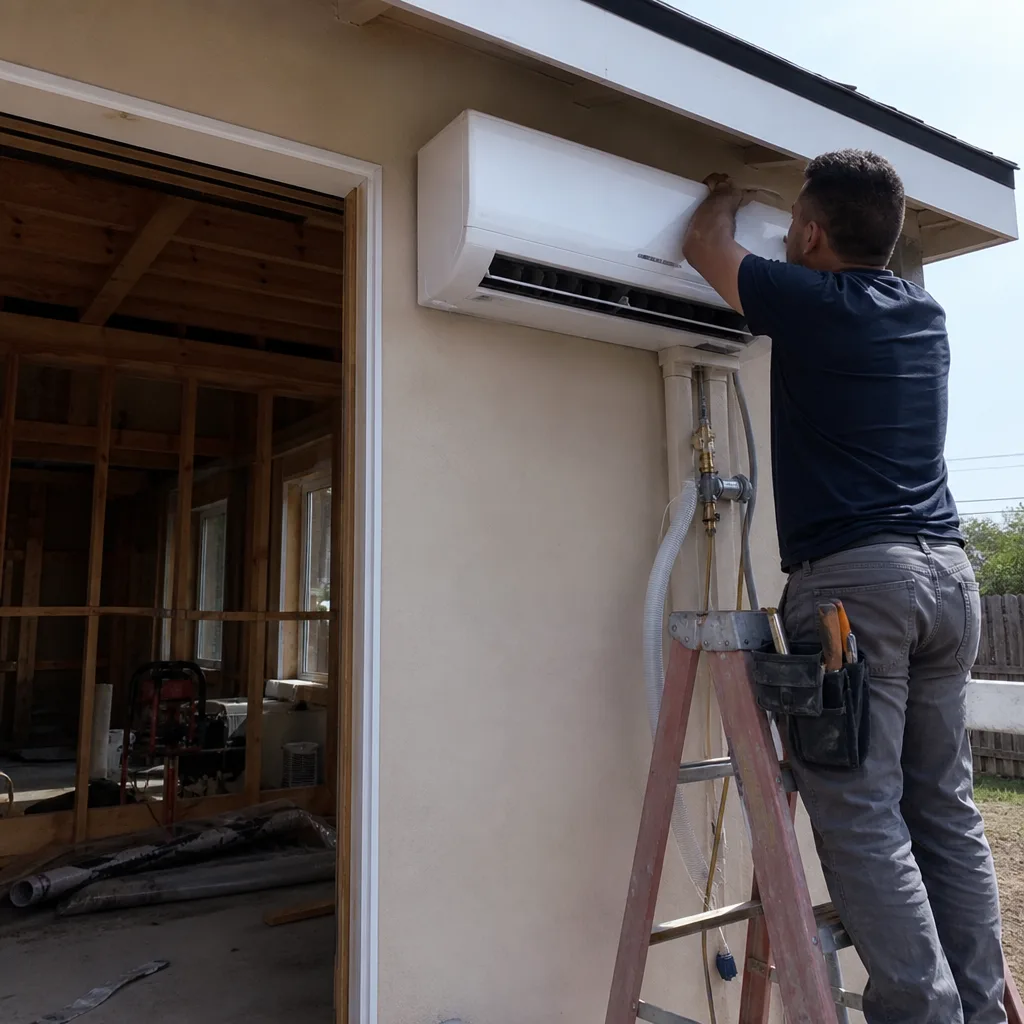
Pomona’s climate demands a four-season maintenance rhythm that coastal California doesn’t. Summer heat tests slab and stucco; Santa Ana winds assault the envelope; winter rain exposes drainage failures; spring offers the last viable window for exterior seal work. Document every round with dated photos and specific findings. The 15 minutes per season protects the six-figure investment your ADU represents, preserves warranty coverage, and builds the resale file that Pomona’s sophisticated buyers now expect to see. Start with the October inspection - before the first Santa Ana event tests what was built last year.
Written by Nadia Ellery, Owner at Ellery ADU Studio Pomona, serving Pomona since 2015.