
Last updated September 25, 2026
ADU Warning Signs: A Pomona Homeowner’s Reference Guide
Here’s the counterintuitive truth we’ve learned from 900 ADU projects since 2015: the most expensive warning signs in Pomona don’t show up during a site walk. They live in paperwork. A contractor with a clean truck and a friendly crew can still hold a permit record riddled with stop-work orders, or present a bid with a $12,000 “allowance” line item that vaporizes your budget by framing. In Pomona’s ADU market, where the average garage conversion runs $165,000-$240,000 all-in and a new detached unit starts around $285,000, a single overlooked clause can cost more than a kitchen remodel. This guide teaches you to read the documents that actually govern your project: permit histories, bid line items, contract scope language, and design set completeness. No gut feelings. Just the specific red flags that stall or derail ADUs in Pomona, and the exact questions to ask before you sign.
Quick Answer
The most critical ADU warning signs in Pomona are documentary, not cosmetic. Check the contractor’s CSLB license against Pomona’s public permit portal for unfinalized permits and stop-work orders. Verify bids contain unit-priced line items, realistic material allowances for current Pomona costs, and explicit Title 24 compliance language. Confirm design sets include stamped structural drawings, completed energy forms, and dimensioned setback plans. Any gap in this paper trail predicts cost overruns, permit delays, or construction defects.
Table of Contents
- How to Read a Contractor’s Permit History on Pomona’s Public Portal
- Bid Red Flags: Line Items That Hide Cost Surprises
- Contract Clauses That Protect You (and the Ones That Don’t)
- Design Set Red Flags: Drawings That Fail at Plan Check
- Communication Breakdowns During Construction
- Prefab and Modular ADU Warning Signs
- Common Mistakes to Avoid
- When to Call a Professional
- Frequently Asked Questions
How to Read a Contractor’s Permit History on Pomona’s Public Portal
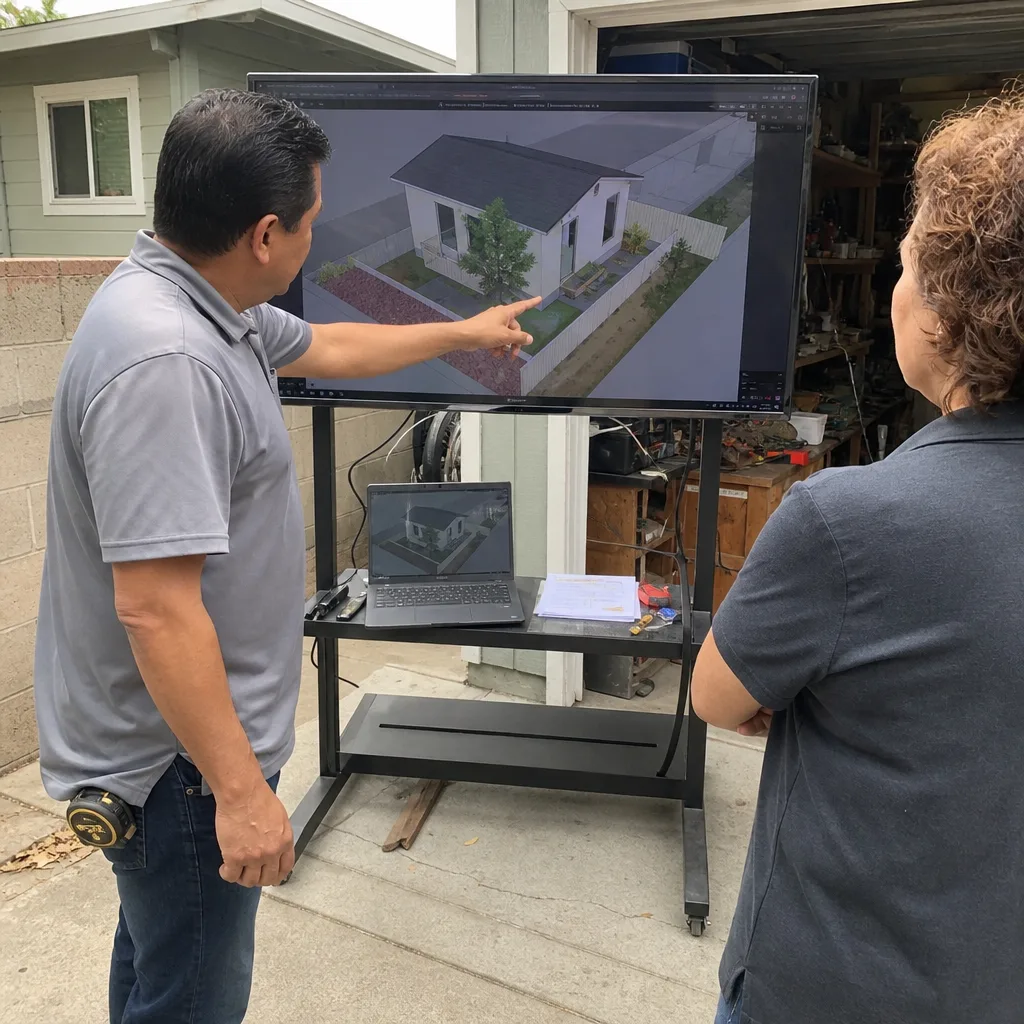
Pomona’s permit records are public data, and most homeowners never look. That’s a mistake. The City of Pomona uses a digital permitting system where you can search by address, permit number, or contractor license. What you find there tells a more reliable story than any reference list.
Three Permit-History Red Flags
- Permits opened but never finaled. A permit that sits “issued” for 18 months without a final inspection usually means the project stalled, the contractor abandoned it, or the work failed inspection repeatedly. In Pomona, where ADU permits must meet both state law and local zoning overlays, an unfinalized permit often signals the contractor couldn’t resolve a correction letter. Ask for the permit number of their most recent Pomona ADU, then verify its status yourself.
- Multiple stop-work orders on a single project. One stop-work order can happen to anyone. Two or more on the same address suggests systemic problems: unlicensed subs working without proper permits, work beyond the approved scope, or safety violations that triggered a city inspector’s halt. On Pomona’s portal, stop-work orders appear as separate case numbers linked to the main permit. Click through and read the violation description.
- License numbers that don’t match CSLB records. California’s Contractors State License Board (CSLB) maintains a free online lookup. Cross-reference the license number on the permit application with the CSLB database. We’ve seen cases where the license on the permit belongs to a different company than the one the homeowner hired, or where the classification is B-General Building when the work requires a C-36 Plumbing or C-10 Electrical specialist. In Pomona, ADU electrical and plumbing must be performed by appropriately licensed subs, and the general contractor’s license must be active and in good standing.
The climate factor matters here too. Pomona’s inland valley location means summer temperatures regularly exceed 95°F, and winter nights can drop below 40°F. HVAC and insulation work that passes inspection on paper may fail in practice if the contractor’s permit history shows no completed projects with Title 24 energy compliance in similar climate zones. Ask specifically: “Show me the finaled permit for your most recent Pomona ADU with full energy compliance documentation.”
At Ellery ADU Studio Pomona home, our license number appears on every permit application we file, and we provide clients the permit number before excavation begins. Under Haven Standard Clause 3 (Transparent Documentation), clients receive direct portal access to track their permit status in real time.
Bid Red Flags: Line Items That Hide Cost Surprises
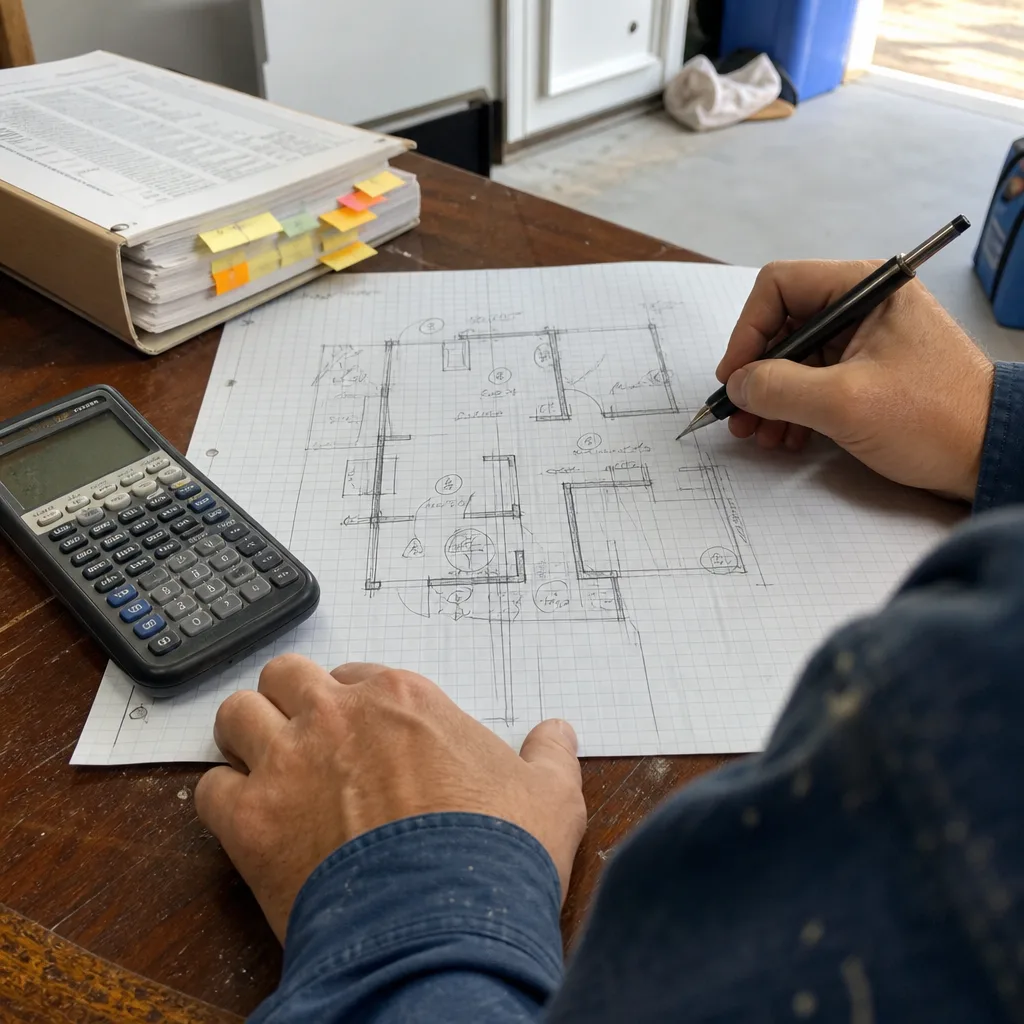
A Pomona ADU bid should read like a specification document, not a marketing brochure. The most dangerous bids we’ve reviewed - and we’ve provided Free Second Opinions on hundreds - share common structural problems that don’t reveal themselves until change orders start arriving.
The Lump-Sum Line Item Problem
When a bid lists “Electrical: $18,000” with no breakdown, you have no basis to evaluate whether that covers a 100-amp subpanel or a 200-amp service upgrade, whether conduit is surface-mounted or in-wall, or how many circuits are included. In Pomona’s older neighborhoods like Mayfair or Lincoln Park, many homes still have 100-amp main services that cannot support an ADU without a utility upgrade. A lump-sum electrical line item lets the contractor claim “that wasn’t in scope” when the utility requires a new transformer drop.
We quote electrical with unit pricing: panel upgrade if required, circuit count, outlet and switch locations, EV-ready stub if requested, and fixture allowance with specific brand tiers. Under Haven Standard Clause 1 (Written Price Before Any Work Starts), every line item carries a fixed price. No allowances without defined scope limits.
Allowances Below Current Pomona Material Costs
Material allowances are common in ADU bids, but the dollar figure must reflect actual 2024-2025 replacement costs in the Pomona market. Here’s what we regularly find in competitor bids:
- Tile allowance of $3.50/sq ft when mid-grade porcelain runs $5.50-$8.00/sq ft installed in Pomona
- Window allowance specifying “builder grade” when Title 24 requires NFRC-rated, low-U-factor windows that cost 40% more
- Appliance allowance of $2,500 for a full kitchen when basic stainless packages start at $4,200
- Landscaping allowance with no square footage or irrigation specification, useless for Pomona’s water-restricted climate
The fix is simple: ask for the allowance to be replaced with a specified product or a realistic range with a written cap. “Allowance: tile, $3,500 max, client selects from samples at [specific supplier]” is acceptable. “Allowance: finishes, TBD” is not.
Missing Title 24 Compliance Line Item
Every ADU in California must comply with Title 24, Part 6 energy standards. This isn’t optional, and it isn’t free. The compliance process requires:
- Prescriptive or performance method calculations
- CF-1R and CF-2R forms filed with the permit application
- HERS verification for certain measures (duct sealing, insulation quality)
- Photovoltaic compliance if the main dwelling doesn’t already meet solar requirements
A bid with no Title 24 line item means either the contractor doesn’t understand the requirement (dangerous) or plans to add it later as a change order (expensive). In Pomona, Title 24 compliance for a 500 sq ft garage conversion typically adds $3,500-$7,500 in design and verification costs. If your bid lacks this, the price is incomplete.
Our ADU Design & Permitting in Pomona service includes Title 24 calculations in the base scope, with the CF-1R form completed before permit submittal, not after the first correction letter.
Contract Clauses That Protect You (and the Ones That Don’t)
The contract is where design-build studios and traditional contractors diverge most sharply. In a typical Pomona ADU project, the homeowner signs with a designer, then separately with a builder, and the two contracts often conflict. Our Garage Conversion ADU in Pomona and New Detached ADU in Pomona services operate under a single contract because we’ve seen what happens when they don’t.
Three Contract Red Flags
No written change-order threshold. A contract that says “changes will be priced as they occur” gives the contractor unlimited pricing power once you’re committed. The Haven Standard specifies a written change-order threshold: any modification over $500 requires a signed change order before work proceeds. This protects both parties from scope creep and from “I thought we agreed” disputes.
No lien release schedule tied to payment milestones. California mechanics lien law allows subcontractors and suppliers to file liens against your property even if you paid the general contractor in full. A proper contract requires unconditional lien releases from every tier at each payment milestone. We provide these with every invoice. If your contract doesn’t mention lien releases, ask why. If the contractor says “we’ll handle it,” get it in writing or walk.
Indemnification language that excludes permit delays. Some contracts include broad indemnification clauses that shrink to nothing when you read the exclusions. “Contractor not responsible for delays caused by third parties” sounds reasonable until you realize the city plan checker is a third party, and permit delays are the most common schedule killer in Pomona. A fair contract allocates permit delay risk explicitly: who pays for extended site protection, who covers the cost of rescheduled inspections, what happens if the delay exceeds 60 days.
Pomona’s planning department processes ADU permits under state-mandated timelines, but completeness reviews and correction cycles still add weeks. A contract that pretends this doesn’t exist is written for the contractor’s convenience, not yours.
Design Set Red Flags: Drawings That Fail at Plan Check
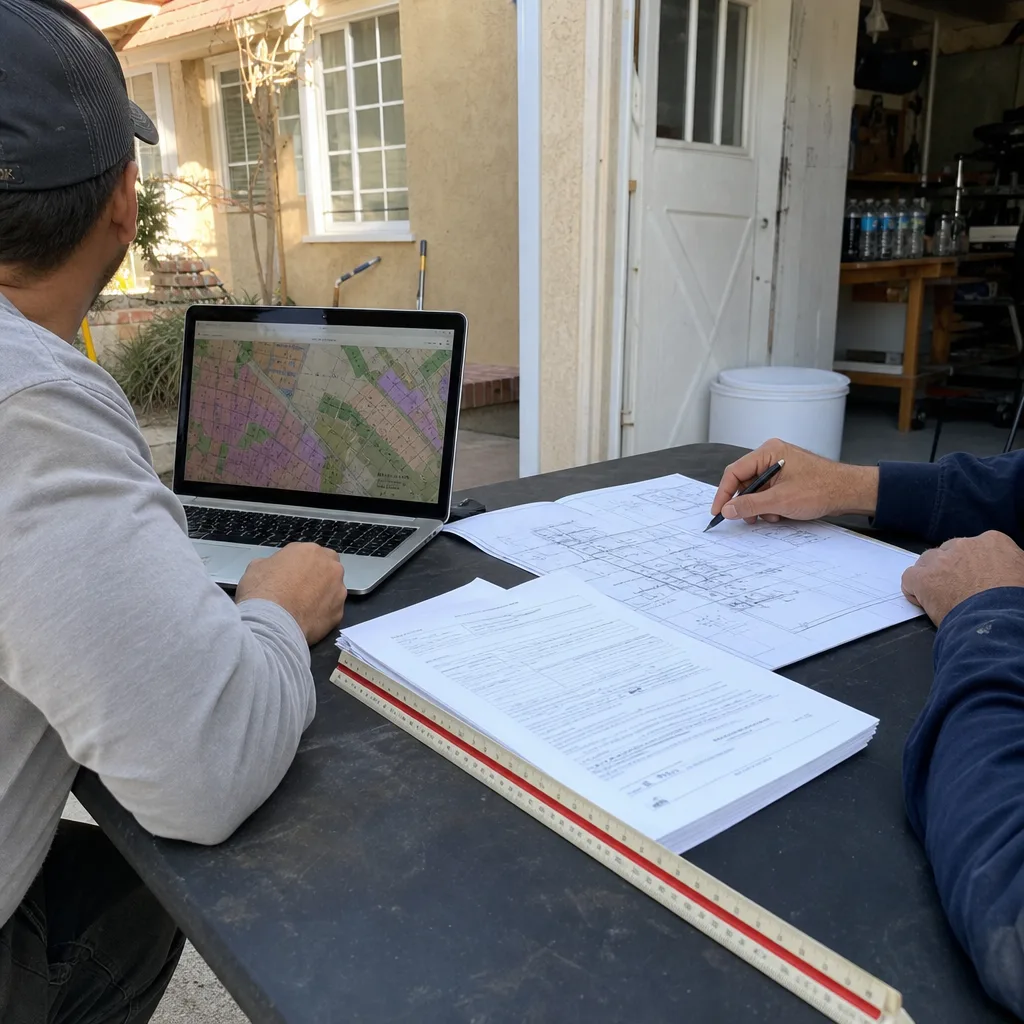
The permit set is the core product of any ADU project. At Ellery ADU Studio, we treat it that way because a rejected permit set costs more than a rejected bid. Here are the specific drawing deficiencies that generate correction letters in Pomona.
Missing Site Plan with Setback Dimensions
Pomona’s zoning code specifies setbacks by zoning district: R-1, R-2, R-3, and specific plan overlays like the Downtown Pomona Specific Plan or the Lincoln Park Historic District. A design set that shows the ADU footprint without dimensioned setbacks to all property lines cannot be reviewed for compliance. We’ve seen competitors submit site plans with a north arrow and a scale bar but no dimension strings. Plan check returns it in 48 hours.
The setback variance - the extra distance the city requires between your new ADU and the property line - varies by district and by ADU type. A junior ADU (JADU) within the existing footprint has different setback requirements than a new detached unit. The drawings must show both the required setback and the actual measured distance, signed off by a survey or the plot plan from the county assessor.
Energy Compliance Forms Listed as ‘TBD’
A permit set with “Title 24: TBD” or “HERS: pending” is incomplete. Pomona Building & Safety will not accept it. The CF-1R form must be complete, the compliance method selected (prescriptive, performance, or HERS-verified), and the HERS rater identified if required. We complete these forms before submittal because we’ve learned that “we’ll get it later” means “we’ll rush it under pressure and make mistakes.”
No Structural Engineer Stamp on Foundations Over 200 Sq Ft
California Building Code requires structural engineering for detached ADU foundations exceeding 200 square feet, and for any foundation in Pomona’s liquefaction zones - which includes much of the alluvial valley floor where Pomona sits. A design set with a foundation plan drawn by the architect but no structural engineer’s stamp will be rejected. The structural calculations must address:
- Soil bearing capacity (Pomona’s expansive clay soils in some neighborhoods require deeper footings)
- Seismic design category (Pomona is in CBC Seismic Design Category D)
- Retaining wall loads if the ADU is on a sloped lot
- Utility trench backfill specifications for gas, water, and sewer lines
James Hardie siding systems and Tuff Shed modular structures still require Pomona-specific structural adaptation for seismic and wind loads. The manufacturer’s standard drawings are a starting point, not a permit-ready set.
Communication Breakdowns During Construction
Even a perfect permit set and a clean contract can’t save a project where information stops flowing. These are the communication failures we’ve documented in Pomona ADU rescues - projects we took over after another contractor stalled or walked.
Correction Letters Shared Only Verbally
When Pomona Building & Safety issues a correction letter, it arrives in writing with specific code citations and required revisions. A contractor who summarizes corrections verbally (“they want a bigger beam”) rather than forwarding the actual letter is hiding something. Maybe the correction reveals a fundamental design error. Maybe it triggers a structural redesign the contractor doesn’t want to pay for. Under Haven Standard Clause 3, clients receive every correction letter within 24 hours, with our written response plan attached.
Inspection Results Not Provided in Writing
Every inspection generates a pass/fail record. A passed inspection means work can proceed. A failed inspection requires correction and re-inspection, often with a fee. Contractors who don’t share inspection results leave homeowners guessing about schedule and liability. We provide inspection reports with photos: the approved footing, the signed electrical rough-in, the final occupancy certificate. This documented photo record becomes part of your property file for future sale or refinance.
Substitution Requests Without Written Change Orders
“The tile you picked is backordered, so we used this other one” is a substitution. Without a written change order identifying the original specification, the replacement product, and any price adjustment, you have no recourse if the substitute is inferior. This is especially common with plumbing fixtures and electrical panels, where contractors maintain supplier relationships that may not match your selections. Our contract requires written approval for any substitution, with product data sheets for the proposed alternative.
Prefab and Modular ADU Warning Signs
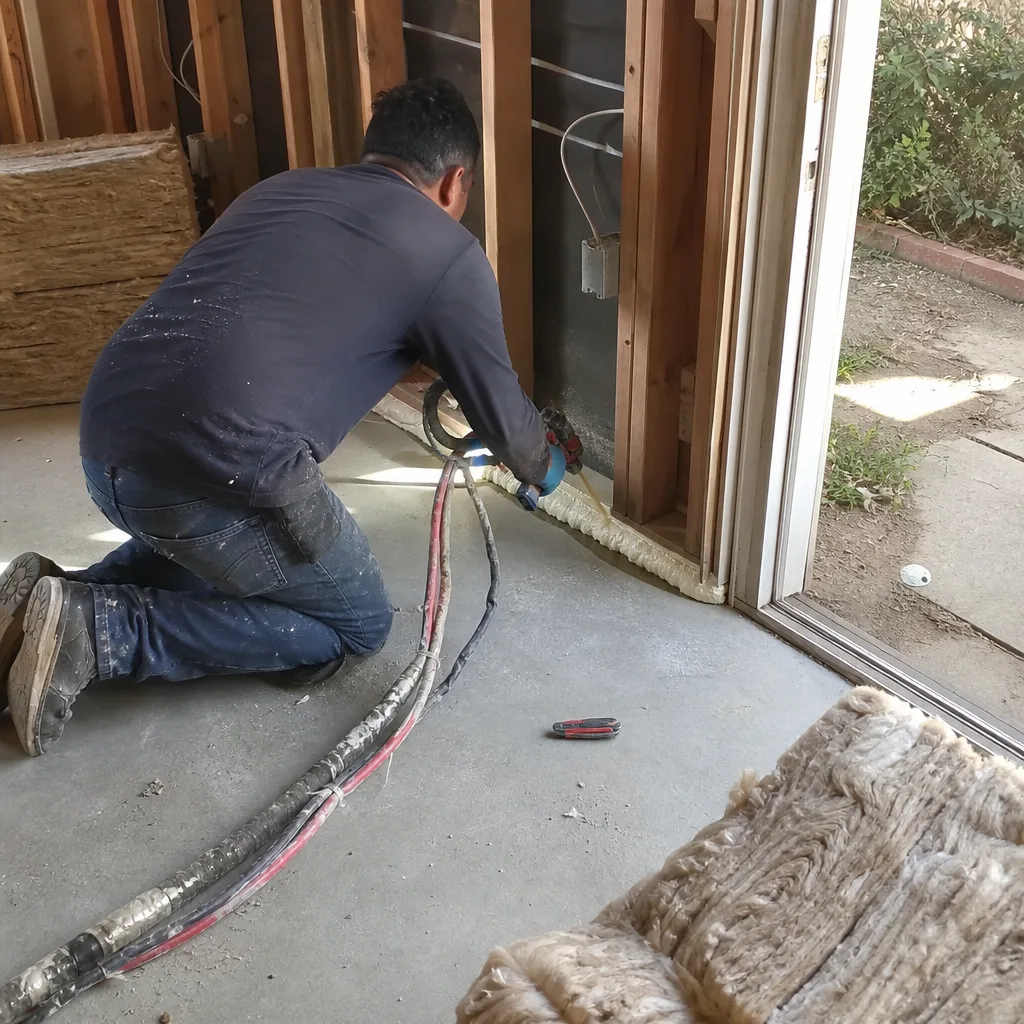
Prefab and modular ADUs - from brands like Boxabl, Plant Prefab, and Tuff Shed - offer genuine advantages in speed and quality control, but going it alone versus hiring a professional introduces very different risk profiles. They also introduce warning signs specific to the procurement and coordination model.
The “Turnkey” Misrepresentation
Some Pomona contractors advertise “turnkey prefab ADU” when their scope is actually limited to site delivery and connection. The actual services required include:
- Site preparation and foundation (not included in most prefab base prices)
- Utility trenching and connection to city water, sewer, and electrical (often excluded)
- Permit set adaptation for Pomona’s specific plan check requirements
- Crane or flatbed delivery coordination with street closure permits if needed
- Final tie-in inspections and certificate of occupancy
A bid that quotes “$85,000 turnkey” for a Boxabl unit but excludes foundation, utilities, and permits is not turnkey. It’s a delivery price with a misleading label. Our single-contract model specifies and coordinates prefab systems from initial selection through final inspection, with one written price that includes all of the above.
Manufacturer Drawings vs. Permit-Ready Sets
Plant Prefab and Dvele provide excellent engineering packages, but these are manufacturer documents, not Pomona permit sets. They require:
- California-specific seismic adaptation
- Pomona Fire Department access and hydrant distance verification
- Local utility connection details (Southern California Edison and Golden State Water have specific requirements)
- Title 24 compliance documentation for the completed assembly, not just component U-factors
A contractor who says “the manufacturer handles all that” hasn’t filed permits in Pomona. We adapt manufacturer drawings into permit-ready sets as standard practice, with structural engineering stamps where required.
Common Mistakes to Avoid
- Trusting a verbal permit timeline. Pomona’s ADU permit timeline is state-governed for completeness review, but plan check corrections add unpredictable weeks. Any contractor who promises “permits in two weeks” without qualifying for completeness review versus full plan check is either inexperienced or misleading you.
- Accepting a design contract without construction pricing. The designer-versus-builder blame gap destroys budgets. We’ve taken over projects where the architect’s beautiful drawings required $40,000 in structural changes the builder hadn’t priced. A single contract with one written price eliminates this.
- Ignoring Pomona’s specific plan overlays. The Downtown Pomona Specific Plan, Lincoln Park Historic District, and various hillside zoning districts impose design standards beyond the base code. A contractor who doesn’t ask your zoning district in the first meeting hasn’t done their homework.
- Paying for permits before verifying permit status. Never pay a “permit expediter fee” or permit deposit without receiving the actual permit application number and the ability to verify it on Pomona’s portal. We’ve seen homeowners pay $5,000 for “permits in process” when no application had been filed.
- Skipping the utility feasibility check. Pomona’s older water mains and sewer lines in neighborhoods like Westmont and Madison don’t always have capacity for ADU connections. A contractor who doesn’t verify this with Golden State Water and the city’s sewer division before design is planning to surprise you later.
- Assuming a garage conversion avoids all setbacks. Converting an existing garage to an ADU preserves the envelope, but any expansion beyond the existing footprint triggers setback requirements. We’ve seen contractors begin demolition assuming full exemption, then discover the proposed bathroom addition extends two feet into required side yard.
- Not requesting a documented photo record. Without photos, you have no evidence of pre-existing conditions, completed rough work, or final installation details. This becomes critical when selling the property or addressing warranty claims. Our photo record is delivered with every invoice, not summarized in a verbal report.
When to Call a Professional
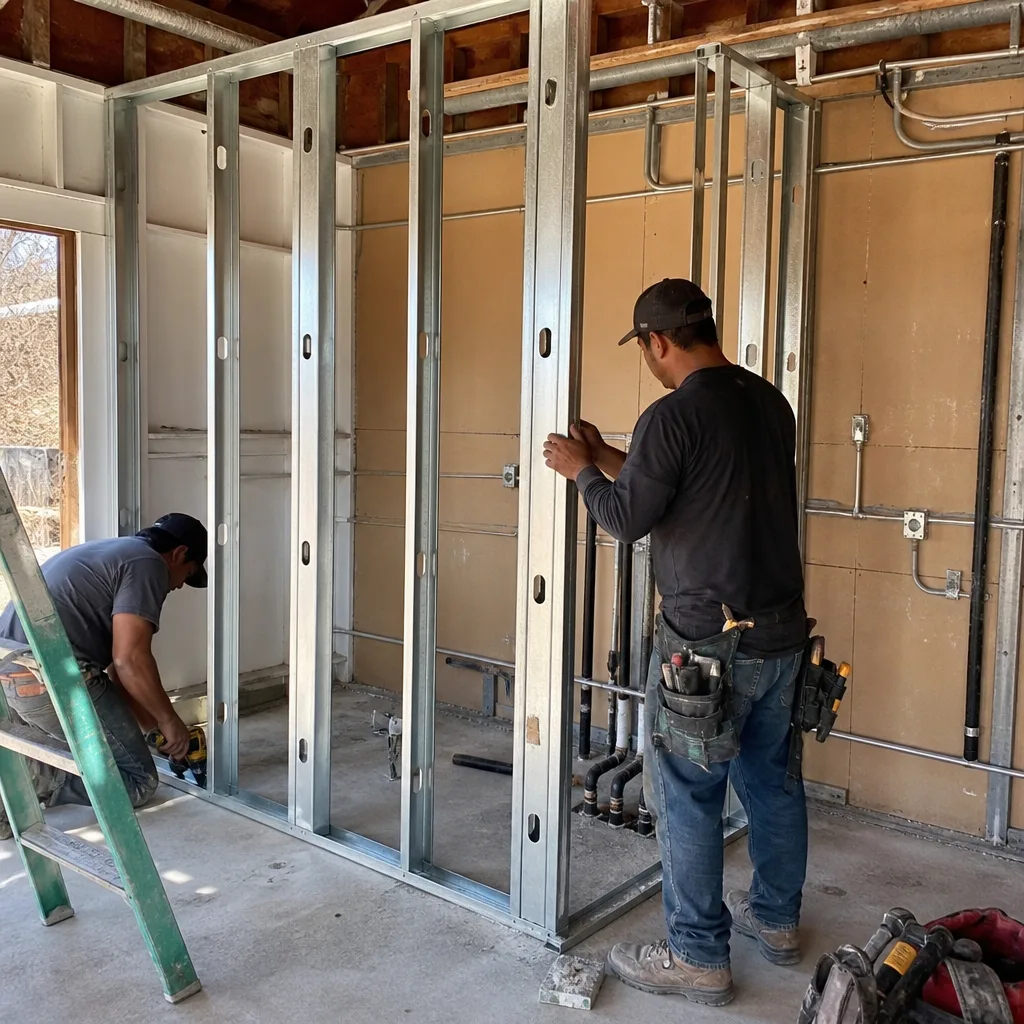
Call a design-build professional when your research surfaces any of the warning signs above, or when you’re comparing estimates and can’t reconcile line-item differences - our step-by-step guide to hiring an ADU contractor in Pomona can help you evaluate your options. The Free Second Opinion we offer exists for exactly this moment: you’ve received a written estimate, something feels incomplete, and you need a licensed eye on the scope and pricing.
Specific scenarios that warrant immediate professional review: a bid with no Title 24 line item; a permit history showing multiple unfinalized permits; a design set missing structural engineering stamps; or a contractor who won’t provide their license number for CSLB verification. These aren’t minor concerns. They’re predictive indicators of project failure.
Ellery ADU Studio Pomona offers free estimates in Pomona - call (657) 286-7915. A live person answers 24/7, and every estimate includes a written price before any work begins, per Haven Standard Clause 1.
Frequently Asked Questions
Garage conversion ADUs in Pomona typically run $165,000-$240,000 all-in, from measured drawings through final inspection. This range assumes a standard two-car garage, no major structural repair, and connection to existing utilities with adequate capacity. Costs rise with foundation replacement, electrical service upgrades, or hillside grading. Call (657) 286-7915 for an exact quote - estimates are free, and every project receives a written price before any work starts under Haven Standard Clause 1.
The price should not change if the contract is properly structured. Under Haven Standard Clause 5 (No Surprises), our scope is locked at signing with a written change-order threshold of $500. Any modification above that requires your signed approval before work proceeds. Beware contracts with open-ended “cost plus” language or undefined allowance caps - these are the primary mechanisms for post-signing price increases.
We pull all permits as part of our single-contract design-build service. The application is filed under our license number, we respond to all correction letters, and we coordinate inspections. You receive the permit number for portal tracking and every correction letter within 24 hours. This is standard practice, not an add-on - any contractor who asks you to pull your own permits is avoiding accountability.
A garage conversion typically takes 8-12 months; a new detached ADU, 12-18 months. Pomona’s completeness review is state-timed, but plan check corrections, utility coordination, and inspection scheduling add variability. The critical path runs through permit approval, not construction speed. A contractor who emphasizes fast construction but is vague about permitting hasn’t managed this timeline before.
Verify three things: that their most recent Pomona ADU permit is finaled (not just issued), that no stop-work orders appear on recent projects, and that the license number on the permit matches active CSLB records. These checks take 10 minutes and reveal more than any reference call.
Prefab units from brands like Plant Prefab or Tuff Shed can reduce construction time by 30-50%, but total project cost depends on site conditions. Foundation, utility connection, and permit adaptation often offset the module savings. For flat lots with straightforward utility access, prefab may cost 10-15% less all-in. For hillside or utility-constrained sites, the difference narrows or reverses. We specify and coordinate both prefab and site-built options with the same single-contract, written-price structure.
The Bottom Line
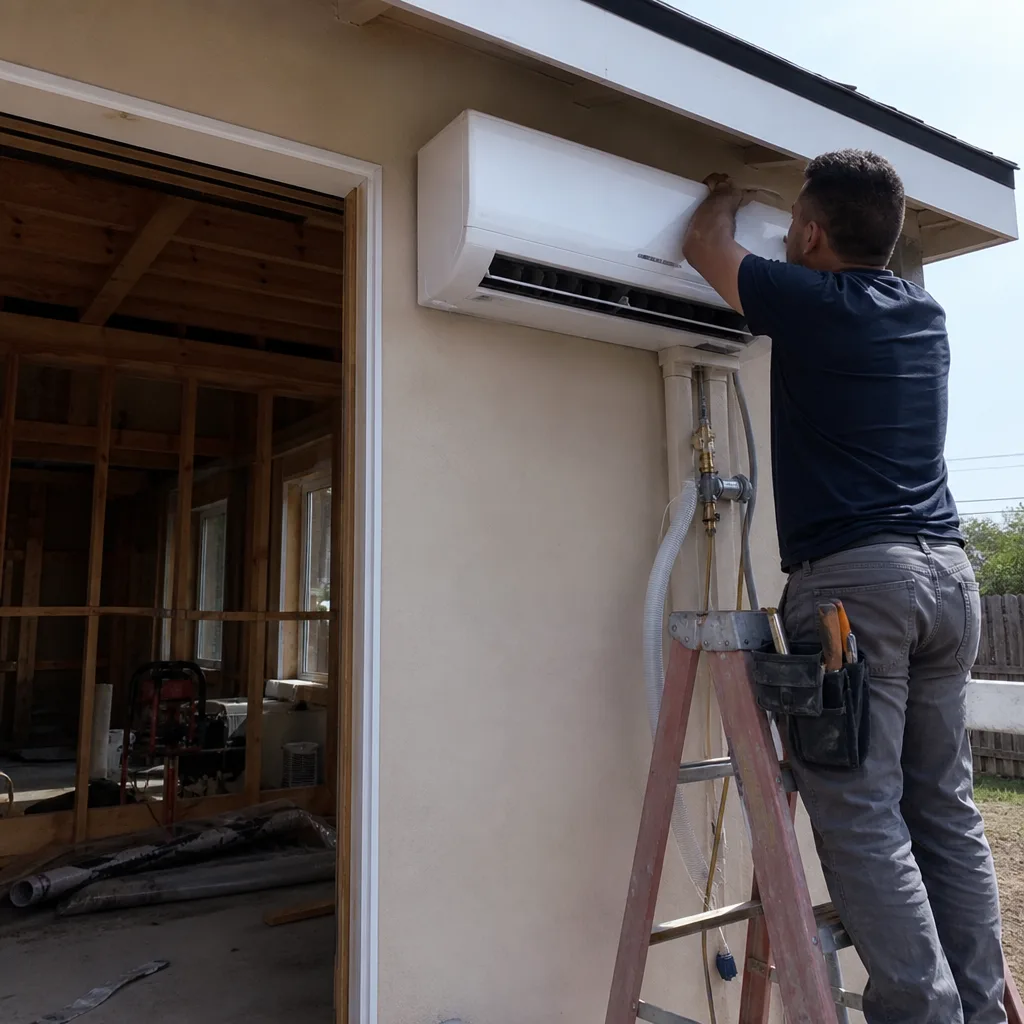
The worst ADU outcomes in Pomona don’t start with bad construction. They start with incomplete documents: a bid that hides costs in vague allowances, a contract that shifts all risk to the homeowner, a design set that fails at plan check, or a permit history that reveals a pattern of unfinished projects. Reading these documents before you sign is a skill, and this guide provides the specific checkpoints. For more guides & resources on ADU planning in Pomona, visit our blog.
The alternative is a design-build studio that treats documentation as the product: a written price before work starts, a permit set that passes plan check the first time, a photo record of every visit, and a 365-Day Done Right Promise backed in writing. That’s the standard we’ve operated under since 2015, and it’s the standard that protects the six-figure investment an ADU represents.
Written by Nadia Ellery, Owner at Ellery ADU Studio Pomona, serving Pomona since 2015.