
Last updated September 25, 2026
DIY vs Professional ADU: The Pomona Homeowner’s Decision Guide
California’s owner-builder exemption allows a homeowner to pull their own building permit, but it also triggers a mandatory disclosure to any buyer within five years of completion. That disclosure functionally discounts the property’s ADU value in a financed sale. In Pomona, where median home prices have climbed past $650,000 and an ADU can add $200,000 or more in appraised value, that discount is not an abstract risk. It is a line item on a future buyer’s loan denial. This guide maps the legal boundary between DIY and professional ADU construction in Pomona, not just the practical one, and complements our How to Hire a ADU Contractor in Pomona: A Step-by-Step Guide. You will learn which tasks California law actually permits you to self-perform, which require licensed trades regardless of ownership, what the five-year resale disclosure means for your equity, and how to calculate whether the labor savings justify the title, insurance, and financing exposure.
Quick Answer
A DIY ADU in Pomona can legally save $15,000-$35,000 on finish tasks like painting, landscaping, and cabinet installation, but owner-builders cannot self-perform electrical, plumbing, or HVAC work without separate CSLB licenses. The owner-builder exemption triggers a five-year resale disclosure that complicates conventional financing for buyers, and self-managed projects carry personal liability for jobsite injuries not covered by standard homeowner’s insurance. For most Pomona homeowners, professional design-build is the lower-risk financial choice when the ADU is intended for rental income, financed construction, or resale within ten years.
Table of Contents
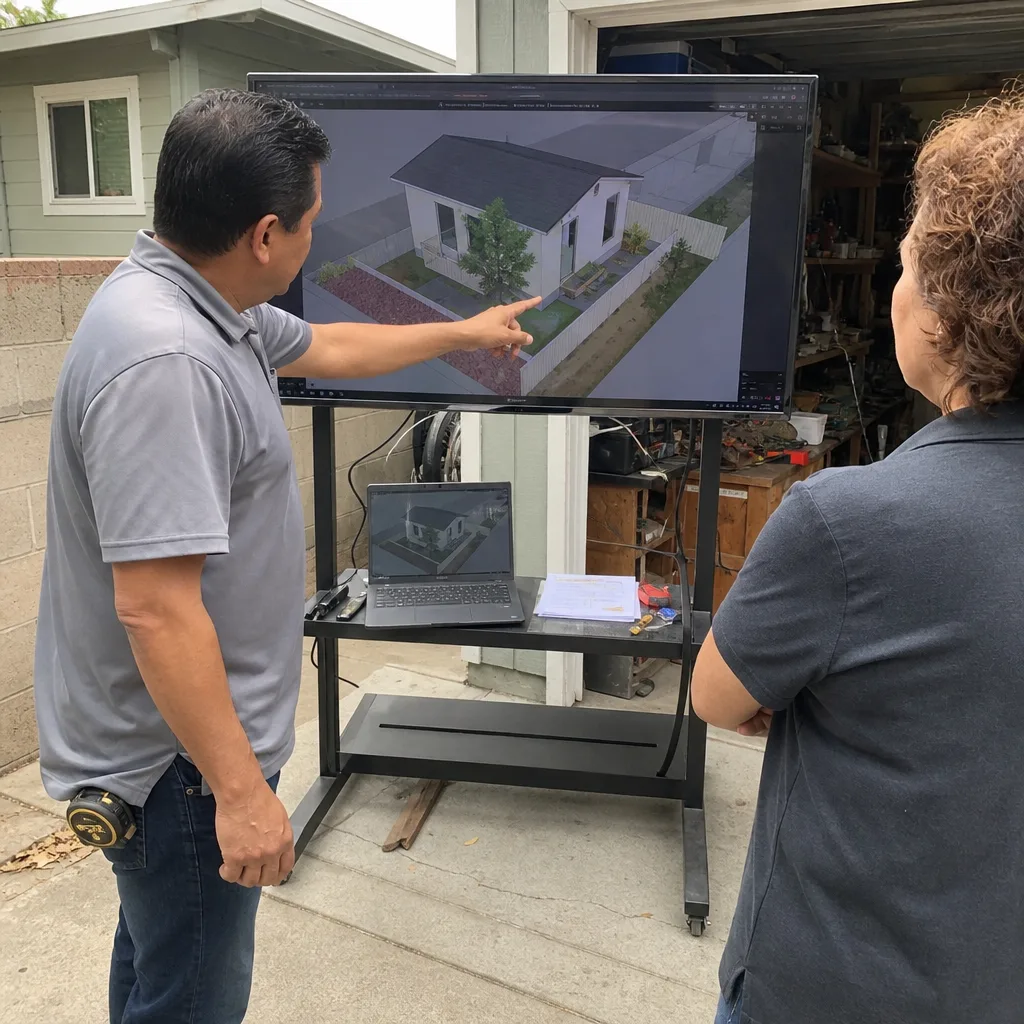
- California Owner-Builder Rules: What You Can Actually Do Yourself
- The Five-Year Resale Disclosure and Your Property Value
- Realistic DIY Labor Savings in Pomona
- Insurance Exposure: Injury, Property Damage, and Permit Voidance
- When Professional Design-Build Is the Lower-Risk Financial Choice
- Design-Build vs. Piecemeal: The Contractor Gap
- Prefab and Modular ADU Considerations for Pomona Lots
- Common Mistakes to Avoid
- When to Call a Professional
- Frequently Asked Questions
- The Bottom Line
California Owner-Builder Rules: What You Can Actually Do Yourself
The owner-builder exemption in California Business and Professions Code Section 7044 lets a homeowner act as their own general contractor on a single-family residence, including an ADU. The exemption exists to give homeowners flexibility, not to eliminate licensing requirements for skilled trades. Understanding where the line falls is the first step in deciding whether DIY is genuinely viable for your Pomona project.
What the Exemption Covers
As an owner-builder, you may:
- Pull the building permit in your own name
- Hire and direct subcontractors for individual trades
- Perform finish carpentry, painting, flooring, tile setting, and landscaping with your own labor
- Manage scheduling, material procurement, and inspections
This sounds broad. It is not. The exemption does not extend to work that California requires to be performed by a licensed contractor in a specific classification.
What Requires a Licensed Contractor Regardless
Three trades are non-negotiable. An owner-builder cannot self-perform any of the following, even on their own property:
- Electrical work (C-10 license): Any wiring beyond low-voltage fixtures, including panel upgrades, subpanel installation for the ADU meter, and 240V appliance circuits. Pomona’s building department will require a C-10 contractor’s license number on the electrical permit application.
- Plumbing work (C-36 license): Water service lines, sewer lateral connections, gas lines, and fixture installation. In Pomona’s older neighborhoods like Mayfair and Lincoln Park, original clay sewer laterals often require replacement to accommodate ADU flow; this is C-36 work.
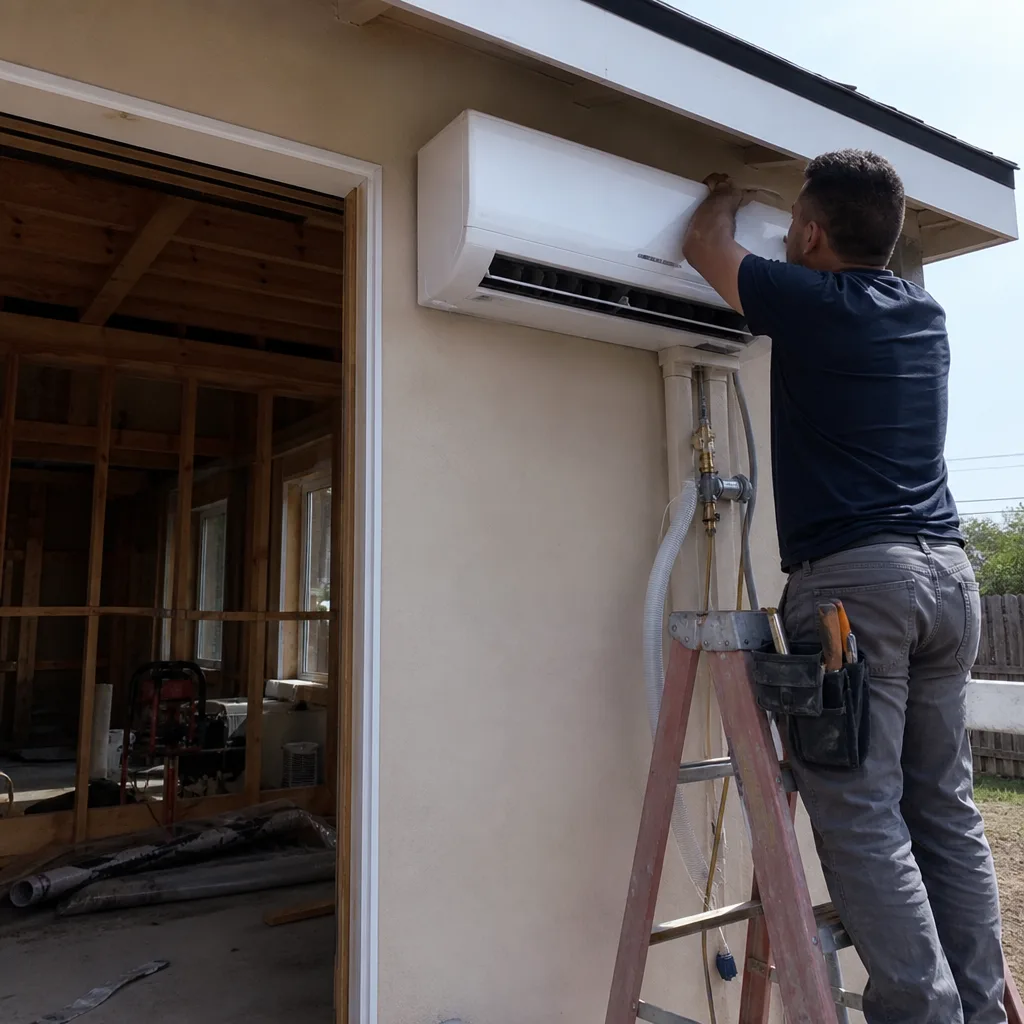
- HVAC work (C-20 license): Mini-split installation, ductwork, and ventilation systems. Pomona’s inland valley climate, with summer highs above 95°F and winter lows near 40°F, makes mechanical heating and cooling a code requirement, not an option.
Some Pomona homeowners assume they can “assist” a licensed friend or relative and split the savings. This is not how the CSLB views it. The licensed contractor must perform the work directly or through their own employees. An owner-builder who signs off as the permit holder but allows unlicensed labor on restricted trades faces permit revocation, stop-work orders, and potential misdemeanor charges under Business and Professions Code Section 7028.
We have reviewed permit files at Pomona City Hall where owner-builder applications were flagged because the electrical rough-in was performed by the homeowner’s brother-in-law with a C-10 license that had lapsed. The project sat idle for eleven weeks while the owner found a properly licensed electrician and resubmitted. That delay cost more than hiring a professional from the start.
The Five-Year Resale Disclosure and Your Property Value
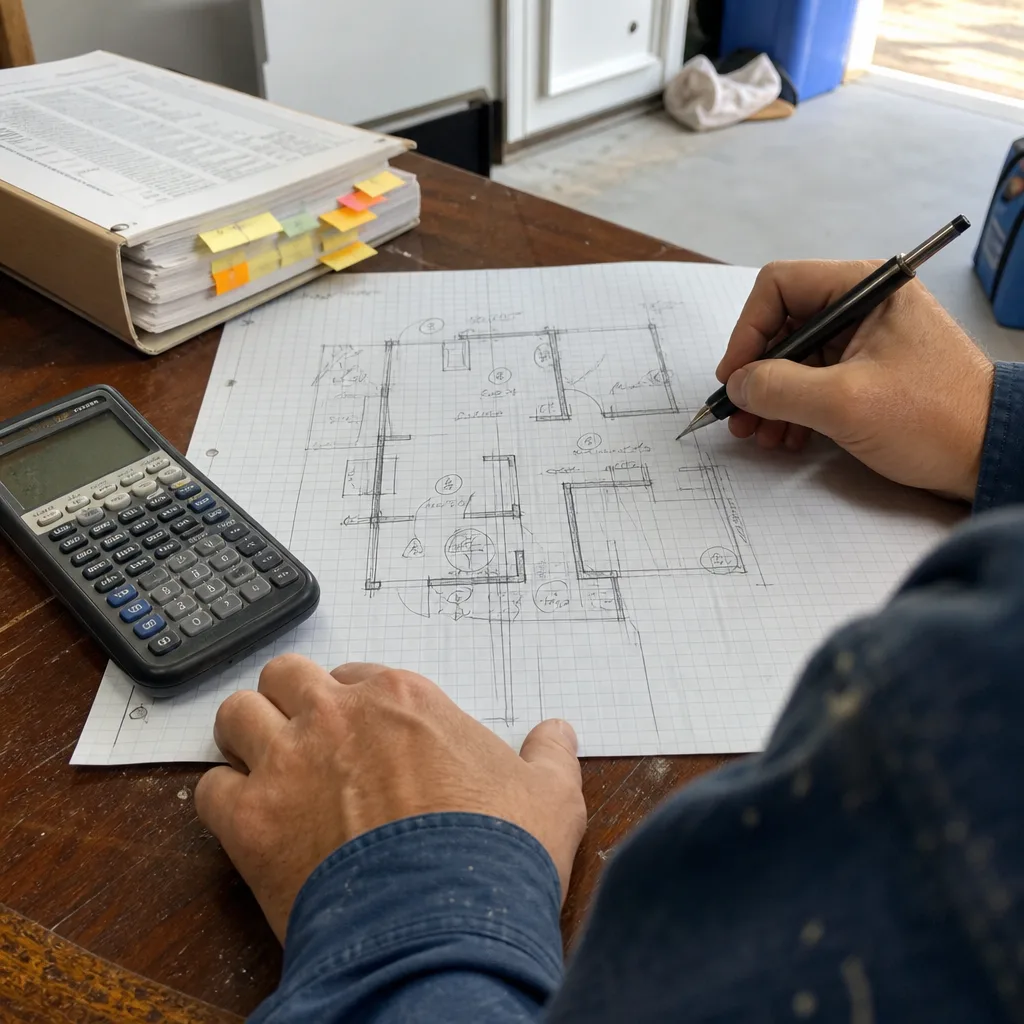
This is the point most DIY guides omit entirely. Under California Business and Professions Code Section 7044, an owner-builder must disclose their status to any buyer within five years of final inspection. The disclosure must appear in the natural hazard disclosure report, the transfer disclosure statement, or a separate statutory form. It cannot be buried in fine print.
What the Disclosure Says
The standard disclosure language states that the structure was built by an owner-builder, that no licensed contractor oversaw the complete project, and that the buyer should verify permit compliance and construction quality independently. This is not a red flag in cash transactions between family members. In a conventional financed sale, it functions as one.
How Lenders and Appraisers Respond
Conventional lenders in Pomona, working under Fannie Mae and Freddie Mac guidelines, treat owner-built structures with heightened scrutiny. The specific consequences include:
- Appraisal adjustments: Appraisers may apply a condition rating of C4 or C5 (below average) to an owner-built ADU without documented third-party inspections, reducing the comparable value by 10-20%.
- Title insurance exceptions: Title insurers may exclude coverage for defects in the ADU’s construction or permitting, shifting liability to the buyer and requiring the seller to indemnify.
- Buyer financing delays: Lenders may require additional inspections, engineering reports, or a holdback of 10-15% of the ADU’s appraised value until a licensed contractor certifies compliance.
In Pomona’s competitive market, where buyers often waive contingencies, an owner-builder disclosure does not kill deals. It does, however, push buyers toward FHA or VA loans with stricter property condition requirements, or toward cash investors who discount their offers accordingly. We have seen pre-approval letters withdrawn when the disclosure surfaced in escrow, not because the ADU was poorly built, but because the lender’s secondary market investor would not purchase a loan on an owner-built accessory structure.
The five-year clock starts at final inspection, not certificate of occupancy. If you sell in year six, the disclosure requirement expires. If you sell in year four, it is active and unavoidable. For homeowners who built an ADU to generate rental income for five years and then sell, this timing is critical.
Realistic DIY Labor Savings in Pomona
DIY can save money. The question is where, and how much, and whether the savings survive the hidden costs. Here is a task-by-task breakdown for a typical 500-square-foot garage conversion ADU in Pomona, based on 2024 labor rates in the San Gabriel Valley; for detailed 2026 figures, see our ADU Cost Breakdown: The Pomona Homeowner’s Reference for 2026.
Tasks Where DIY Saves Real Money
| Task | Pro Labor Cost | DIY Savings | Skill Required |
|---|---|---|---|
| Interior painting (walls, trim, ceiling) | $3,200-$4,800 | $2,800-$4,200 | Moderate; prep is 70% of quality |
| Landscaping and hardscaping | $4,500-$8,000 | $3,500-$6,500 | Low to moderate; permits for retaining walls over 4 feet |
| Cabinet and vanity installation | $1,800-$3,200 | $1,500-$2,800 | Moderate; level and plumb critical |
| Finish hardware and fixtures | $800-$1,400 | $700-$1,200 | Low |
| Window coverings and shelving | $1,200-$2,400 | $1,000-$2,000 | Low |
Total realistic DIY savings on finish tasks: $9,500-$16,700 for a garage conversion. For a new detached ADU, where landscaping and exterior finish scope is larger, savings might reach $15,000-$25,000.
Tasks Where DIY Voids Permits or Warranties
- Foundation and structural work: Pomona’s expansive clay soils in the Ganesha Hills and Phillips Ranch areas require engineered foundations. An owner-builder who pours their own slab without a structural engineer’s stamp will fail inspection and may be required to remove and repour.
- Roofing: C-39 license required for projects over $500 in labor and materials. Self-installed roofing voids manufacturer warranties on shingles and underlayment.
- Fire separation and egress: Pomona’s fire department enforces CalFire standards for ADU separation from the primary residence. An owner-builder who misinterprets the one-hour fire-rated assembly requirement will fail the fire inspection and delay certificate of occupancy.
The hidden cost of DIY is not the labor you perform. It is the labor you perform incorrectly and must pay to remove. We have documented photo records of garage conversions in Pomona’s historic districts where an owner-builder installed a kitchen vent hood without proper clearance to combustibles. The correction required removing the cabinet run, re-framing, and re-inspecting. The owner saved $400 on installation. The correction cost $3,200.
Insurance Exposure: Injury, Property Damage, and Permit Voidance
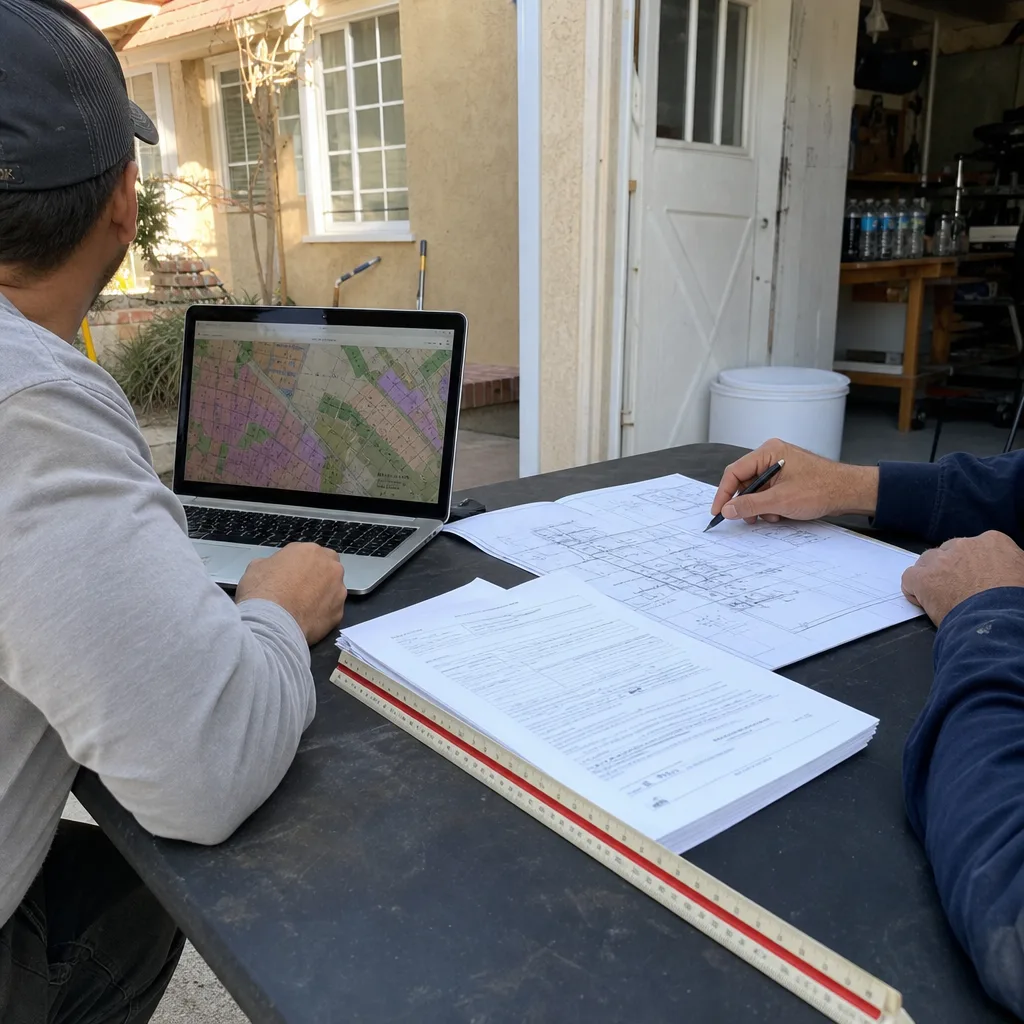
Homeowner’s insurance does not cover construction liability the way most policyholders assume. This distinction determines whether a jobsite injury becomes a six-figure personal exposure or a routine workers’ compensation claim.
How Homeowner’s Insurance Responds
Standard HO-3 policies in California cover “occasional, non-business” activities by the named insured. They exclude:
- Injuries to workers who are “regularly employed” by the homeowner, even part-time
- Injuries occurring during “business pursuits,” which courts have interpreted to include rental property construction
- Damage caused by unpermitted work, or work that violates building codes
If you hire a day laborer from a Pomona home improvement center parking lot to assist with framing, and that worker falls from a ladder, your homeowner’s policy will likely deny the claim. You become personally liable for medical costs, lost wages, and potential disability. In California, where there is no statutory cap on personal injury damages, this exposure is unlimited.
How Licensed Contractor Coverage Works
A licensed contractor in California must carry:
- General liability insurance: Minimum $1,000,000 per occurrence, covering property damage and third-party injury
- Workers’ compensation insurance: Required for any employee, covering medical costs and disability regardless of fault
- Contractor’s bond: $25,000, providing a recovery path for consumers if the contractor defaults
At Ellery ADU Studio Pomona home, our license number appears on every page, and our coverage is verified, not just claimed. Under Haven Standard Clause 3 (Verified Coverage), clients receive certificates of insurance before work begins.
The insurance gap is sharpest for rental-intended ADUs. If an owner-builder constructs an ADU and later rents it, and a tenant is injured due to construction defect, the owner’s personal assets are exposed. A licensed contractor’s completed operations coverage extends to defects discovered after project closeout, typically for ten years.
When Professional Design-Build Is the Lower-Risk Financial Choice
DIY is not always the expensive option. Professional design-build is not always the safe one. But there are specific project conditions where the professional route produces lower total cost of ownership, even at higher upfront price.
Condition 1: Financed Construction
Construction lenders in California require licensed contractor involvement for disbursement. Lenders will not fund owner-builder draws without a contractor’s sworn statement, lien releases, and inspection sign-offs. The owner-builder must either self-fund or accept higher interest rates from hard-money lenders. For a $150,000 ADU, the interest spread between a conventional construction loan at 7.5% and hard money at 12% adds $15,000-$22,000 in financing cost, erasing DIY labor savings.
Condition 2: Lot Complexity
Pomona’s topography varies dramatically. Lots in the Ganesha Hills area slope 15% or more, triggering grading permits, geotechnical reports, and engineered retaining walls. Lots in the historic downtown core have zero-lot-line conditions, requiring setback variances and neighbor consent. These conditions multiply the coordination burden beyond what an owner-builder can reasonably manage. A single missed grading inspection can delay the project by six weeks in rainy season.
Condition 3: Intended Rental Use
Rental ADUs in Pomona must comply with California’s habitability standards, local rent control (if applicable), and fair housing access requirements. An owner-builder who omits accessible entry thresholds or proper ventilation may face retrofit orders from the city’s code enforcement division, or discrimination claims from tenants. Professional design-build includes these requirements in the original scope, not as afterthoughts.
Condition 4: Resale Within Ten Years
The five-year owner-builder disclosure is a known quantity. The unknown is market conditions at sale. In a rising market, buyers may overlook the disclosure. In a flat or declining market, it becomes leverage for price negotiation. Professional construction with documented third-party inspections provides a clean title and standard appraisal treatment, preserving equity.
Under Haven Standard Clause 5 (No Surprises), our scope is locked at signing. No door-side upsells, no scope creep. The written price before work starts includes all permit fees, all inspections, and all documentation. For Pomona homeowners who have already read the three-star reviews of contractors who “found” $40,000 in unforeseen conditions, this clause is the difference between proceeding and walking away.
Design-Build vs. Piecemeal: The Contractor Gap
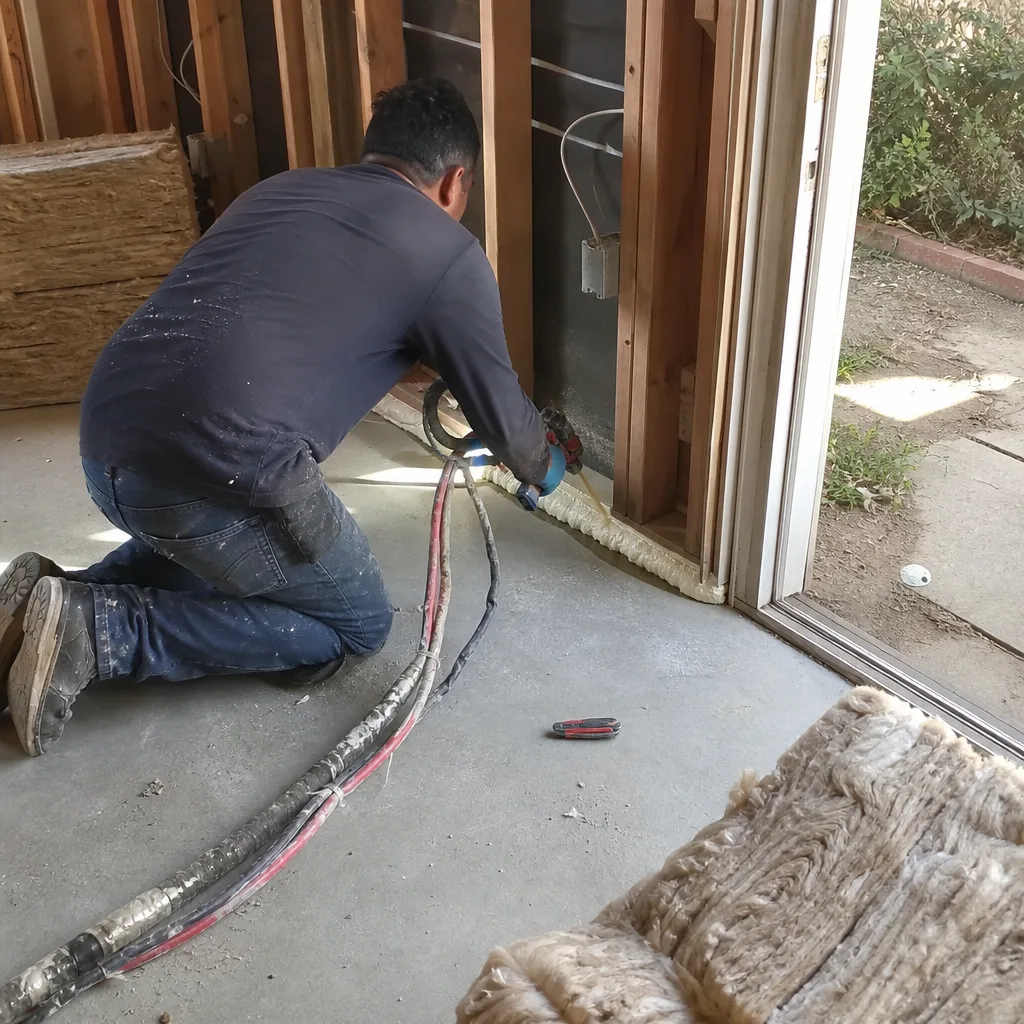
Most ADU projects fail not at construction, but at the handoff between designer and builder. The designer specifies a 24-inch kitchen cabinet run. The builder measures 22 inches and orders filler panels. The designer specifies a mini-split location for optimal airflow. The builder mounts it where the refrigerant line is shortest. These gaps are not malicious. They are structural.
The traditional model separates design and construction into sequential contracts. The homeowner becomes the integration point, translating drawings into buildable scope, mediating disputes, and absorbing cost overruns that neither party will claim. In Pomona, where permit revision fees run $800-$1,500 per submittal, each designer-builder disagreement that requires revised drawings adds direct cost and schedule delay.
ADU Design & Permitting in Pomona at Ellery is not a separate service from construction. It is the same contract, the same team, the same written price. The permit set is the core product, not an afterthought. When our drafters specify a Tuff Shed modular unit with James Hardie siding for a Pomona hillside lot, the construction crew who will install it reviews the drawings before permit submittal. There is no handoff gap because there is no handoff.
This matters for DIY comparison because many owner-builders attempt to replicate design-build integration themselves, hiring a drafter from an online platform, then soliciting bids from contractors who never spoke to the drafter. The result is a permit set that builders cannot price accurately, leading to low-ball bids that balloon during construction. We have provided Free Second Opinions on written estimates from these arrangements, and the pattern is consistent: the “savings” of piecemeal procurement disappear in change orders.
Prefab and Modular ADU Considerations for Pomona Lots
Prefab and modular ADUs are often marketed as DIY-friendly. The reality is more qualified. A modular unit from Mighty Buildings, Boxabl, or Plant Prefab arrives with walls, roof, and MEP rough-in complete. What remains, site work, foundation, utility connections, and finish, still requires licensed trades and permit coordination.
What Prefab Does and Does Not Eliminate
| Element | Prefab Status | Still Required on Site |
|---|---|---|
| Structural shell | Factory-built, engineered | Crane rental, placement, anchoring |
| Electrical rough-in | Pre-wired to junction box | Service connection, panel, inspection |
| Plumbing rough-in | Pre-plumbed to manifold | Sewer lateral, water service, inspection |
| HVAC | Pre-installed mini-split | Refrigerant line connection, electrical |
| Foundation | Not included | Engineered slab or piers, grading, inspection |
In Pomona, where many lots were subdivided before modern utility standards, the site work often exceeds the module cost. A Tuff Shed shell might list at $35,000. The foundation, utility trenching, and connection in a Phillips Ranch cul-de-sac with no rear alley access can add $45,000-$65,000. The owner-builder who budgeted for the module price alone is undercapitalized before breaking ground.
Ellery specifies and coordinates these systems within the same single contract. We have placed Boxabl units on constrained Pomona lots where crane access required street closure permits and PG&E overhead line temporary drops. The module manufacturer does not handle these logistics. A design-build studio that has done it before does.
New Detached ADU in Pomona projects benefit most from prefab when the lot is flat, utility access is straightforward, and the owner values speed over customization. For hillside lots, historic districts with design review, or rental units requiring specific floor plans, site-built or hybrid methods often prove more economical.
Common Mistakes to Avoid
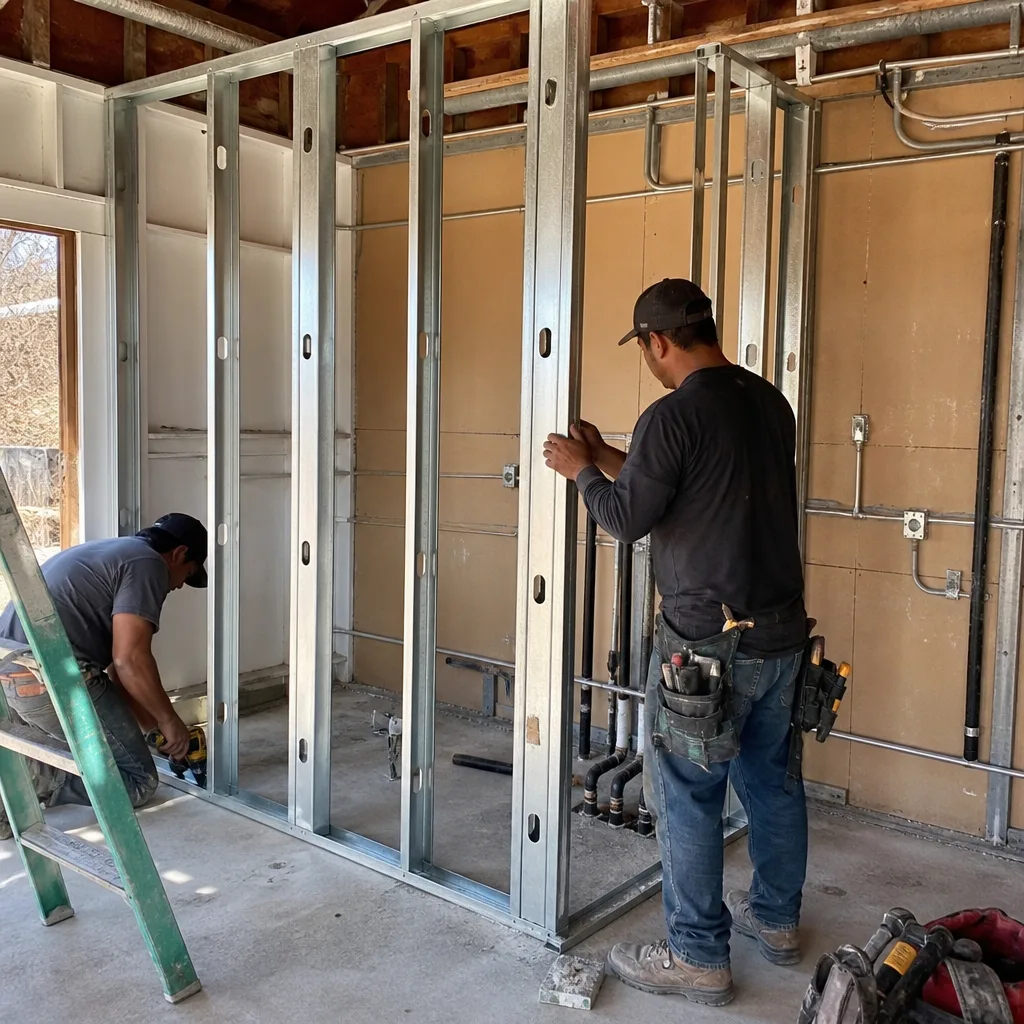
- Assuming the owner-builder exemption covers all trades. It does not. Electrical, plumbing, and HVAC require separate CSLB licenses, and performing them without licensure voids your permit and exposes you to misdemeanor charges.
- Neglecting the five-year resale disclosure in financial planning. Pomona homeowners who intend to sell within five years of ADU completion must price in the financing friction the disclosure creates, or plan to hold until the requirement expires.
- Buying a prefab module without pricing site work. The module is rarely more than 40% of total project cost in Pomona’s older neighborhoods with utility constraints and grading requirements.
- Hiring unlicensed day laborers for “assistance” on restricted trades. Your homeowner’s policy will not cover their injuries, and CSLB enforcement in Los Angeles County is active, not theoretical.
- Separating design and construction contracts without integration. The designer-versus-builder blame gap is the most common cause of ADU project failure in our experience. Each party points at the other while the homeowner funds the resolution.
- Skipping geotechnical review on hillside lots. Pomona’s Ganesha Hills and northern foothills have expansive soils and undocumented fill. An owner-builder who pours foundation without soil report risks slab failure that no warranty covers.
- Underestimating permit revision costs. Pomona’s building department charges per submittal for revised plans. A designer and builder who disagree after permit issuance generate $800-$1,500 fees per cycle, plus schedule delay.
When to Call a Professional
Call a professional when the project conditions exceed your capacity to absorb unmanaged risk. This is not a statement about your skill. It is a statement about the legal, financial, and insurance structures that surround ADU construction in California.
Specifically: call when you need construction financing, when your lot slopes or has utility constraints, when you plan to rent the ADU, when you may sell within ten years, or when the permit set requires structural engineering. These are not edge cases in Pomona. They are typical conditions.
For more guides & resources, visit our blog, or call Ellery ADU Studio Pomona: we offer free estimates in Pomona. We will review your lot, your goals, and any written estimate you already have in hand. Our Free Second Opinion is available on any written estimate, no obligation. Call (657) 286-7915 to schedule.
Frequently Asked Questions
A professional garage conversion ADU in Pomona typically runs $165,000-$245,000 all-in, drawings through final inspection, while DIY finish work on the same project might reduce cost by $15,000-$35,000. The tradeoff is the five-year resale disclosure, personal liability for jobsite injuries, and the risk of permit voidance if licensed trades are not properly engaged. Call (657) 286-7915 for a written quote on your specific project, estimates are free.
Yes, but the permit is in your name as owner-builder, which triggers the five-year resale disclosure regardless of who performs individual trades. The licensed electricians and plumbers you hire must list their own license numbers on their permit applications, and you remain responsible for overall code compliance and inspection scheduling. Many Pomona homeowners find that the coordination burden exceeds the savings. Call (657) 286-7915 to discuss whether owner-builder status fits your timeline and risk tolerance.
Inspection standards are identical, but pass rates differ. Owner-builders in Pomona fail first inspections at higher rates due to incomplete documentation, missed code cycles, and scheduling conflicts between trades. Each failed inspection requires re-inspection fees and rescheduling, often adding 4-8 weeks to project duration. Professional design-build studios maintain inspector relationships and pre-submittal review protocols that reduce first-attempt failures.
Self-installation of a prefab or modular unit does not automatically void the manufacturer’s structural warranty, but it does void installation and finish warranties if the foundation, anchoring, or utility connections are not performed to manufacturer specifications. Mighty Buildings, Boxabl, and Plant Prefab each require certified installer involvement for full warranty coverage. Ellery coordinates these requirements within our single-contract scope.
The disclosure affects sale transactions more directly than refinances, but some portfolio lenders in California will flag owner-built structures in appraisal review, potentially requiring additional documentation or reducing the ADU’s contributory value in the loan-to-value calculation. If you plan to cash-out refinance to fund the ADU, professional construction with documented third-party inspections produces cleaner collateral.
Your homeowner’s insurance likely denies the claim, leaving you personally liable for medical costs, lost wages, and disability. California courts have held homeowners liable for injuries to workers they “regularly employed,” even for single projects, when the homeowner directed the work and supplied materials. A licensed contractor’s workers’ compensation policy is the standard protection, and it is not replicable with homeowner’s coverage. For this reason alone, many Pomona homeowners who considered DIY elect professional construction. Call (657) 286-7915 to review how our verified coverage protects your project.
The Bottom Line
The DIY-versus-professional question for a Pomona ADU is not about whether you are capable of swinging a hammer. It is about whether California law permits you to perform the work that matters most, and what legal and financial structures attach when you do. The owner-builder exemption is real but narrow. The five-year resale disclosure is automatic and consequential. The insurance gap between homeowner’s coverage and contractor protection is structural, not semantic.
For finish tasks, painting, landscaping, cabinet installation, DIY saves measurable money. For structural, mechanical, and legal compliance, professional design-build is often the lower-risk financial choice, even at higher upfront cost. The calculation changes with your lot, your financing, your timeline, and your intended use.
At Ellery ADU Studio Pomona, we have designed, permitted, and built over 900 ADUs since 2015, every one with a written price before work started and a documented photo record when work was complete. The Haven Standard governs every project: written price, photo documentation, and our 365-Day Done Right Promise, backed in writing before the first permit is pulled. A live person answers calls 24/7. Our Free Second Opinion is available on any written estimate you have in hand.
Call (657) 286-7915 to schedule your free estimate.
Written by Nadia Ellery, Owner at Ellery ADU Studio Pomona, serving Pomona since 2015.